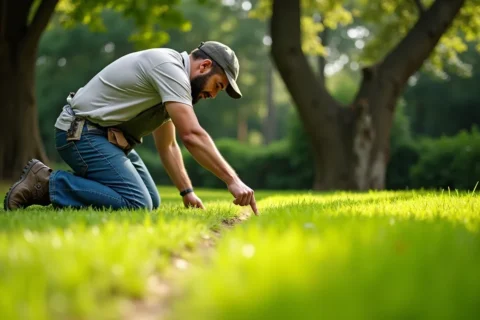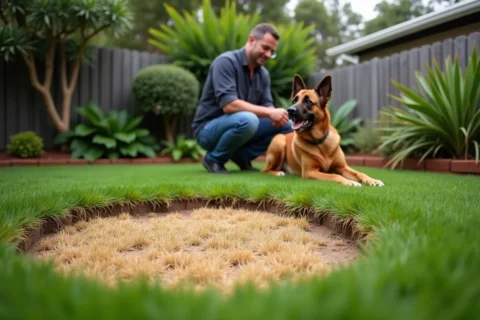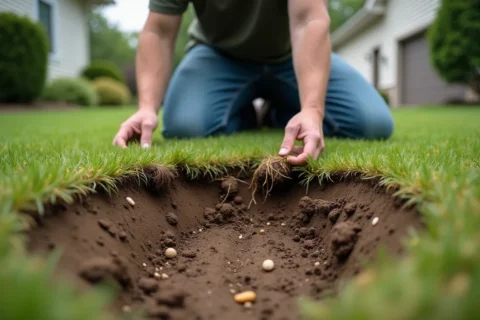

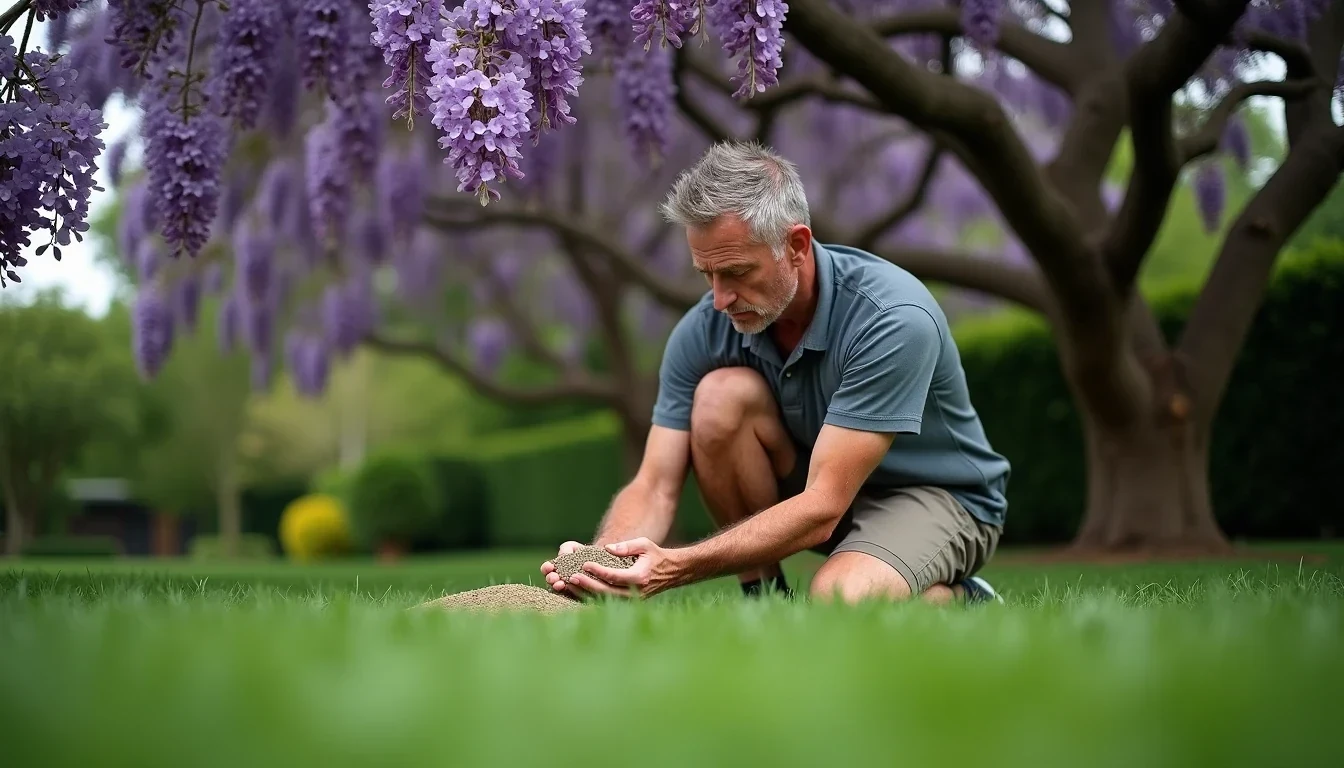
Every spring I get the same call. A homeowner in Bryanston or Constantia has thrown R3 000 at reseeding the dead patch under their jacaranda, and by December it’s bare again. They want to know what I’m doing wrong. I tell them the grass failed because the tree is winning, and it should win. The real mistake was ever treating that zone as lawn.
Mature trees in South African gardens, particularly established exotics like jacaranda (Jacaranda mimosifolia) and tipuana (Tipuana tipu), or indigenous specimens such as Cape chestnut (Calodendrum capense), are dominant features with significant property value, often adding 10% to 20% to a home’s resale price. Their canopies intercept 20% to 40% of light rainfall before it reaches the ground. Their fine feeder roots occupy the top 30 cm to 60 cm of soil, outcompeting shallow turfgrass roots for every available drop of moisture and every unit of nitrogen. A contractor who keeps replacing that failing lawn takes money to participate in a predictable failure.
Why Grass Loses Beneath the Canopy
Standard South African lawn grasses require conditions that mature trees systematically eliminate. Kikuyu (Pennisetum clandestinum) and cynodon (Cynodon dactylon) need four to six hours of direct daily sunlight. Deep shade beneath a dense canopy reduces light levels by 70% to 90%. Even buffalo grass (Stenotaphrum secundatum), marketed as shade-tolerant, thins and yellows under prolonged canopy cover.
The competition is not merely above ground. Tree roots are extraordinarily efficient at extracting water from the upper soil profile. ARC-Roodeplaat research documents this subterranean contest explicitly. Where tree roots concentrate, lawn roots find depleted moisture and nutrient profiles regardless of how generously the homeowner irrigates or fertilises. The homeowner responds by watering more heavily, which wastes municipal water and can induce root rot in sensitive tree species. They fertilise repeatedly, using products like Efekto Lawn & Foliage or Wonder 8:1:5 at R150 to R300 per bag, several applications per season. The grass still fails.
Physical obstruction compounds the problem. Surface roots from ficus, jacaranda, and other large species create uneven terrain that damages mower blades and catches string trimmers. Those same trimmers wound bark and exposed roots, opening entry points for pathogens. Soil compaction from repeated mowing traffic reduces oxygen availability to tree roots. Every intervention intended to save the grass actively harms the tree.
The Damage Contractors Enable
Some of the most destructive practices arrive with the best intentions. Raising soil levels to improve growing conditions for grass around a tree trunk smothers the root flare and surface roots. This causes oxygen deprivation, root girdling, and collar rot. I have seen R50 000 specimen trees decline over two seasons because a well-meaning gardener added 15 cm of topsoil and re-turfed.
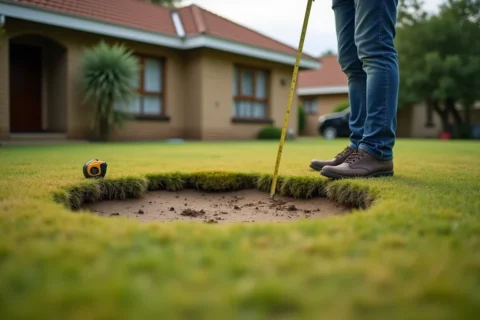
Aggressive root pruning to clear space for lawn installation or to remove surface obstacles compromises tree stability. A tree with severed anchor roots becomes a windthrow risk, particularly in Highveld summer thunderstorms or Cape winter gales. The contractor who cut those roots bears liability whether they recognise it or not.
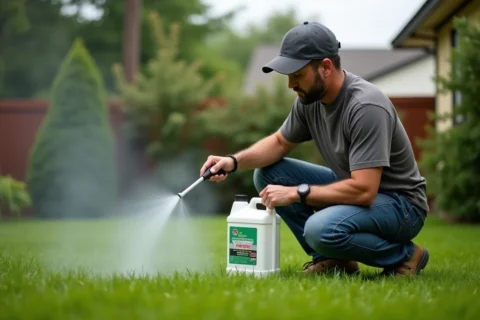
Herbicide drift from lawn weed control and pesticide applications for turf pests like mole crickets leach into the tree’s active root zone. High-nitrogen fertilisers push excessive foliar growth at the expense of root development. Every element of conventional lawn maintenance, applied beneath a canopy, becomes a stressor on the tree that the homeowner values far more than the patchy grass they called about.
What to Install Instead
The professional response is to define where turf ends and a tree protection zone begins. This is not surrender; it is management that acknowledges actual growing conditions rather than fighting them.
Organic mulch is the baseline solution. A 7 cm to 10 cm layer of wood chips, bark nuggets, or composted garden waste extends to the drip line or to a practical geometric boundary. Mulch reduces soil evaporation by up to 30%, suppresses weeds, moderates soil temperature, and decomposes into improved soil structure. Products like Wonder Organic Compost or Efekto Bark Mulch are available at builders’ outlets nationwide. The critical detail: keep mulch 5 cm to 8 cm clear of the trunk itself to prevent collar rot. A clean ring at the base is not bare soil neglected; it is correct practice.
Where the client insists on greenery, shade-tolerant groundcovers compete less aggressively with tree roots than turf and require substantially less water once established. Ophiopogon japonicus (mondo grass) handles deep shade. Plectranthus ciliatus and P. verticillatus spread effectively in dry shade beneath indigenous canopies. Clivia miniata provides seasonal flower interest with minimal irrigation. Crassula multicava (fairy crassula) tolerates the most neglected corners. These are distinct plantings that signal intentional design.
In extreme shade or severe root competition, a defined bare zone edged with brick, steel, or stone is the most honest solution. Regular hand-weeding or careful glyphosate spot application maintains a tidy appearance. The edge itself, installed cleanly, transforms the space from neglected to deliberate.
Making the Case to Clients
Homeowners resist this conversation initially because they perceive lawn as the default ground cover and bare soil as failure. The contractor must reframe the proposition around economics and asset protection.
A 10 m² struggling lawn patch beneath a tree in Johannesburg, requiring supplemental irrigation to survive, adds R50 to R100 monthly to water bills at current Joburg Water tariffs. Annual fertiliser, seed, and re-sodding cycles accumulate further. In Cape Town, with escalating block tariffs, the cost is higher. Over five years, the homeowner spends R6 000 to R12 000 maintaining vegetation they do not want to look at, because patchy thin grass under a canopy is never attractive.
The alternative requires a single capital outlay. Mulch installation at R80 to R150 per m² including labour, or groundcover planting at R120 to R200 per m², eliminates recurring costs. Water savings of 50% or more in the treated zone produce immediate bill reductions. The tree, protected rather than stressed, continues delivering shade that reduces home cooling costs and property value that compounds at sale.
I carry photographs on my phone of previous conversions: a Bryanston property where mondo grass now carpets beneath a 40-year-old ficus; a Constantia garden where steel-edged mulch rings resolved a decade of lawn failure around Cape chestnuts. Visual evidence overcomes hesitation faster than any verbal argument. I also propose phased implementation, converting one zone as demonstration before the client commits to the full property.
Professional language reinforces authority. I refer to “tree protection zones,” “sustainable management,” and “resource allocation” rather than apologising for grass that will not grow. The LGSA framework supports this positioning. The contractor who explains ecological dynamics and presents superior alternatives is not declining work; they are building trust that generates referrals and long-term maintenance contracts.
The Contractor’s Checklist
This weekend, walk every property in your portfolio and identify canopy zones where grass is thin, yellow, or repeatedly replaced. Photograph the failures. Prepare three alternative proposals per site: mulch to drip line, shade groundcover installation, or defined bare zone with hard edging. Source local material pricing from your preferred nursery or builders’ outlet. Calculate five-year cost comparisons for each option against continued lawn maintenance.
At your next client meeting, lead with the tree’s value, not the grass’s failure. Explain that the jacaranda or Cape chestnut is the asset worth protecting. Present the numbers. Show the photographs. Offer the demonstration zone. The client who understands they have been spending money to damage a R50 000 tree will not hesitate to redirect that investment toward keeping it healthy.