
Kikuyu often gets blamed for problems it didn’t cause. A lawn that once recovered quickly, stitched itself back together, and shrugged off foot traffic suddenly turns thin, sour-looking, and patchy. Clients usually respond by asking for more fertilizer. In a garden that has grown up around the lawn, this is often money poured into a problem of shade, not nutrition.
I see this most often when trees have thickened, boundary walls are higher than they used to be, or a new neighbor’s structure has stolen the morning sun. The lawn hasn’t become lazy; the site has changed. Kikuyu (Pennisetum clandestinum) is a full-sun runner grass. Take away the light, and it stops behaving like Kikuyu, no matter how much urea, LAN, or 2:3:2 you apply.
What shade does to kikuyu
Kikuyu is a C4 warm-season grass, built to run on sunlight. Give it enough direct light and warmth, and it will push stolons hard, repair damage quickly, and carry traffic better than most lawns people can afford to maintain. Starve it of light, and the whole system slows down. The leaves stretch, the color washes out, the mat loosens, and the grass starts living off reserves instead of building them.
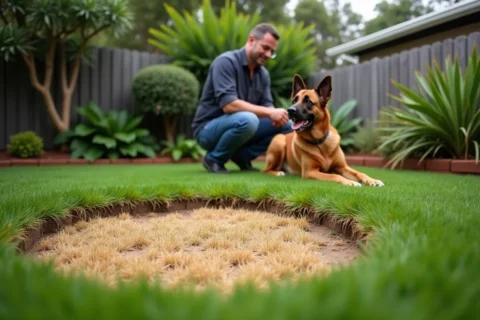
The giveaway isn’t usually the whole lawn. It’s the shape of the decline. The sunny side still has bite. The shaded strip under the tree or along the wall turns soft, pale, damp, and open. Weeds start filling the gaps because they don’t need much invitation. Oxalis, plantain, and sedges love a weak lawn. Fungal problems also thrive when the soil stays wet longer than it should.
A healthy kikuyu lawn wants around 6 to 8 hours of direct sun. Once a site drops below that, especially if the light is filtered or broken up by branches, the lawn starts sliding. Two useful hours of light means a repair bill is waiting to happen.
How to confirm the problem
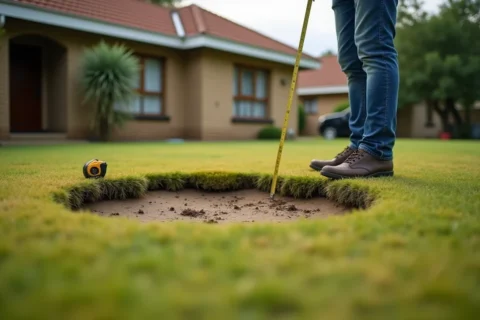
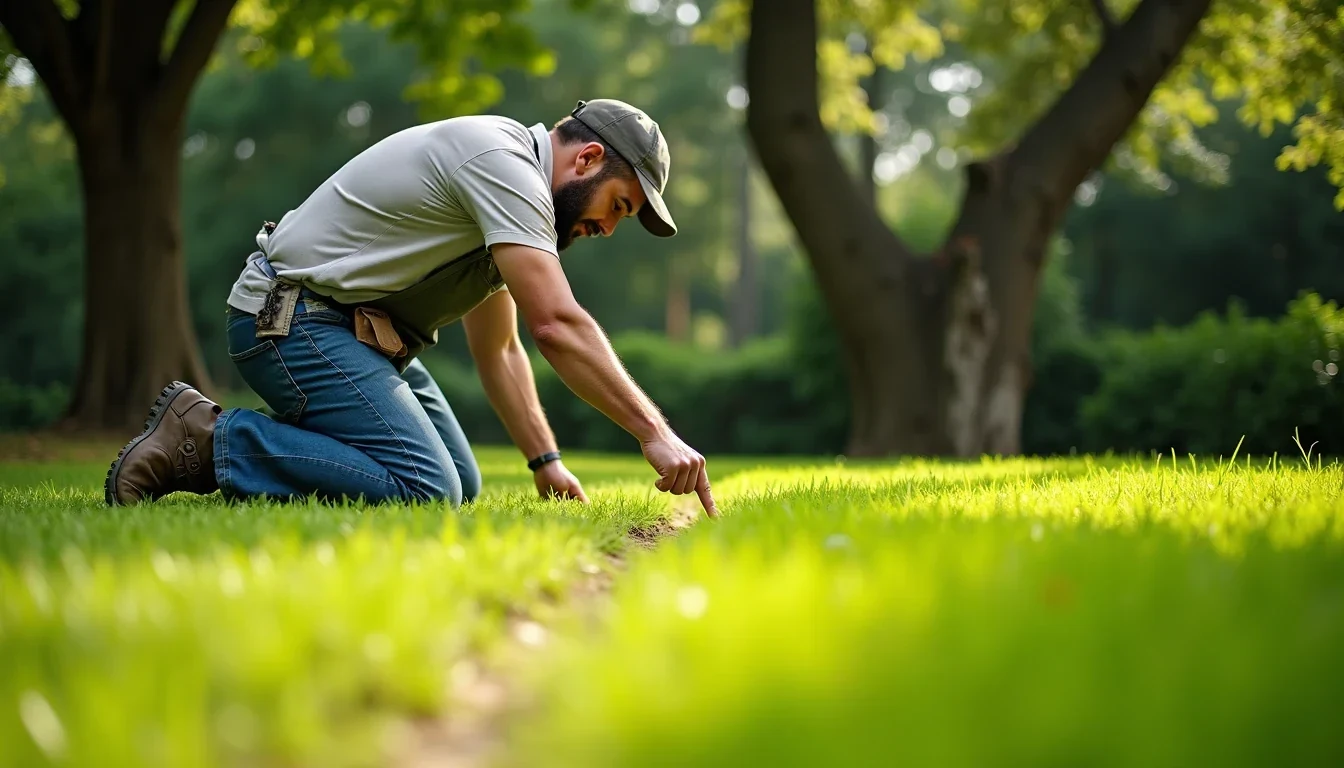
The first thing I do is stop looking at the fertilizer bag and look at the shadow line. Shade problems usually draw a map on the ground. You can often see exactly where the tree canopy, wall, or neighboring structure begins to dominate. If the same strip fails every year while the rest of the lawn stays serviceable, the diagnosis is already halfway done.
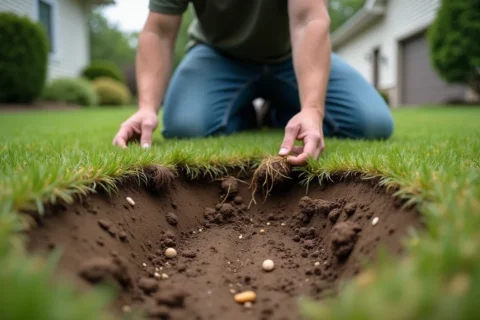
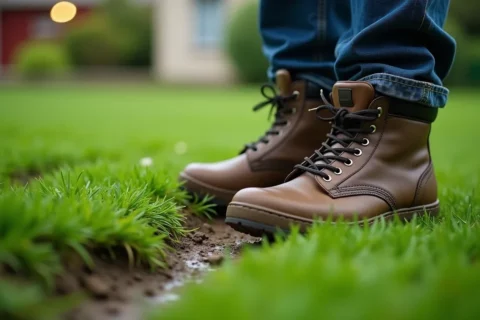
I also check the feel of the ground. Shade areas hold moisture longer because evaporation is slower. That means the soil stays damp, the surface softens, and the runner growth loses strength. A client may describe the grass as “tired.” What they are really seeing is a lawn that cannot generate enough energy to stay dense.
A simple test helps a lot. Visit the site at different times of day and note where the sun actually lands. A phone light meter is enough for a rough check, but the eye is often enough if you are honest about the result. If the bed only gets a brief splash of direct sun and then spends the day under dappled cover, kikuyu will keep disappointing everyone involved.
Then rule out the other usual suspects. Nutrient issues usually spread more evenly. Pest damage leaves clues. Mole crickets, lawn caterpillars, and other pests leave a story if you look for it. Shade decline has a different pattern; it follows the shadow, not the fertilizer schedule.
What to tell the client
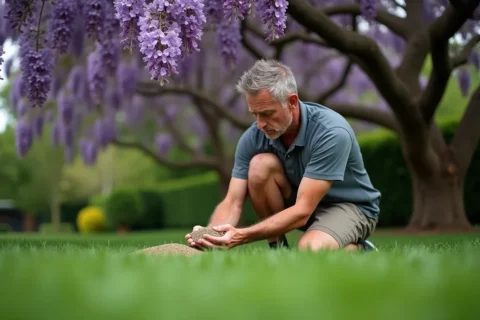
This is the part that saves a contractor from losing money on repeat visits. Some clients want the lawn they had five years ago, before the jacaranda filled out, the wall went up, or the neighbor built the bonus room. That lawn no longer fits the site.
I explain it in plain terms. Fertilizer is the ingredients. Light is the engine. If the plant cannot make energy from the light it gets, more nutrients simply sit there while the lawn keeps thinning. Another way I put it is this: a solar panel does not start working because you added more wire to it.
Photos help. Show the client the healthy section in sun and the failing section in shade on the same property. Once they see the pattern, the argument gets shorter. The job changes from “make the lawn greener” to “fix the site or change the grass.”
That matters for pricing as much as for honesty. A contractor who keeps promising full-kikuyu performance under heavy shade is signing up for call-backs, extra product, extra labor, and very little margin. A bag of fertilizer at around R280 to R450 does not solve a light problem. If anything, it extends the conversation long enough for the lawn to decline further.
What actually works
The first option is pruning. In many gardens, the cheapest gain comes from letting light through the canopy. Crown thinning can open a tree without hacking it into a stump. Lower limb removal helps where one heavy branch is throwing a permanent shadow across the lawn. If the tree is large or close to structures, bring in a proper arborist. A bad cut costs more than the haircut saved.
The second option is to shrink the lawn to where kikuyu still makes sense. This is the answer many homeowners do not want, because they are emotionally attached to a shape on the plan. But a small strip in adequate sun will outperform a big patch in bad shade every time. Turn the dead side into a bed, a path, a small hardscape area, or mulch. A conversion like that can be priced more honestly than endless rescue work. For a small garden bed conversion, a contractor might quote from about R350 to R700 per m² depending on demolition, edging, mulch, and planting. That is often better business than returning every six weeks to feed a lawn that cannot use the feeding.
The third option is to replace the grass where the light situation will not improve. LM Berea (Dactyloctenium australe) is usually the first name I put on the table for low-light areas. It handles far less sun than kikuyu and is the cleaner choice where a client still wants lawn rather than paving. It is slower, softer underfoot, and less aggressive, which is exactly why it survives where kikuyu sulks. In practical terms, LM Berea can cope with roughly 3 to 4 hours of direct sun or dappled light. It also wants a higher mowing height, around 30 to 50 mm, so the leaf area can do its job in weaker light.
LM Berea is not magic. It is simply better matched to the site. It will not take the same punishment as kikuyu, and in colder Highveld winters it can brown back more than a homeowner expects. But if the garden is losing light and the owner still wants a living lawn, it is a more sensible contract than trying to force kikuyu to behave like a shade grass.
How to prevent the same argument next season
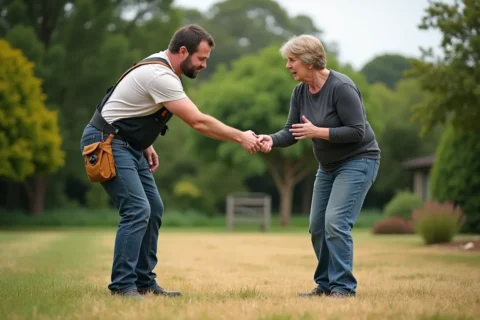
The best time to have this conversation is before the job starts. A contractor should walk the site with the client, stand in the problem area, and say exactly what is missing. If the garden gets good morning light now but will lose it when the new tree matures, say so. If the client wants a lawn under a dense canopy, say what kikuyu will do there: fail slowly and expensively.
A practical maintenance decision is always easier than a rescue fantasy. On shady sites, overfeeding kikuyu only pushes soft growth that weakens faster. Heavy watering makes the dampness worse. Cutting the lawn too short strips away the little leaf area it has left. The mower height should stay sensible, but no mowing trick will replace sunlight.
For contractors, the real discipline is learning where to stop. A shrinking kikuyu lawn under shade is not a fertilizer business. It is a design problem, a pruning problem, or a grass-selection problem.
This weekend checklist
- Walk the lawn at 9 am, 12 pm, and 3 pm, and mark the shaded strips.
- Look for the shadow line, not just the yellowing.
- Check whether the soil stays damp longer in the failing areas.
- Compare the sunny and shaded patches before recommending fertilizer.
- Price the options honestly: pruning, reduction of lawn area, or replacement.
- Put LM Berea on the table when the site will not give kikuyu enough light.
- Refuse the job that depends on a full-sun lawn surviving in two hours of useful sun.