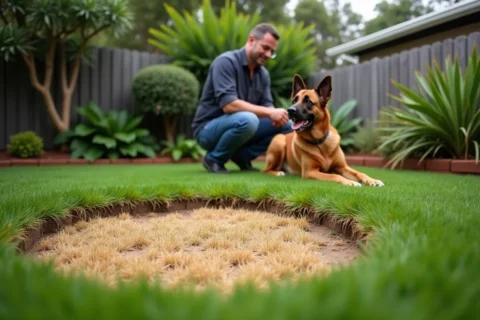

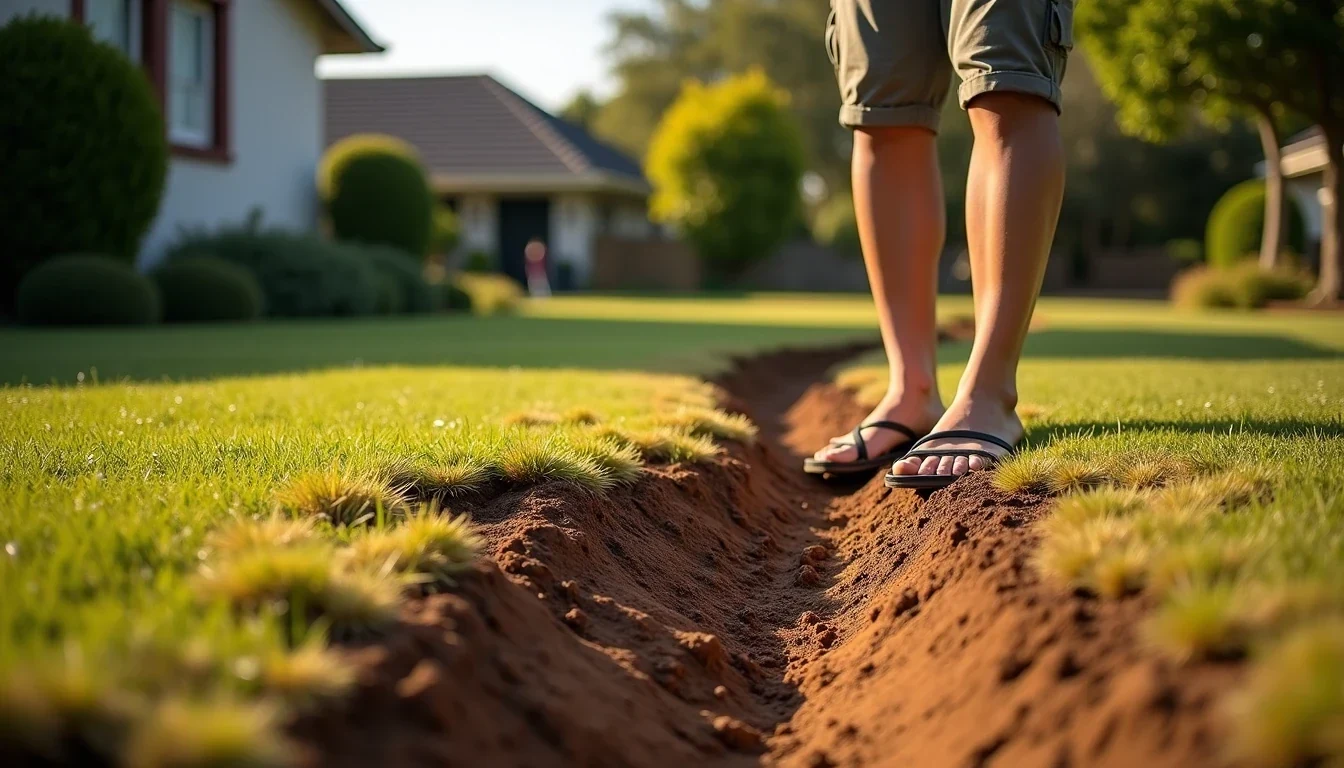
A scarified kikuyu lawn looks like a veld fire swept through your property. Brown stubble, exposed soil, channels of torn runners. This sight makes a homeowner phone their contractor at 6am asking what went wrong. I have taken that call. It comes from selling the outcome, green and dense, without first selling the violence required to get there.
Scarification, or verticutting, is the mechanical removal of thatch and surface runners from creeping grasses. For kikuyu (Pennisetum clandestinum), whose stolons and rhizomes build dense mats 2-5cm thick above the soil line, this is essential maintenance, not optional grooming. The thatch layer blocks water, air, and fertiliser from reaching roots. The lawn becomes spongy, shallow-rooted, and increasingly dependent on ever-more water to stay green. During Joburg Water’s Level 1 restrictions, that inefficiency costs directly. The machine that fixes this problem, with its vertical blades set to cut deep into the turf, temporarily leaves the property looking destroyed. Profit depends on how well you prepare the client for that moment.
What scarification actually does to kikuyu
The machine’s vertical blades slice through the thatch layer, ripping out dead material, living runners, and some green leaf tissue together. A proper pass removes enough organic matter that you can see soil between the remaining stubble. This is the intended result. A scarified lawn that still looks mostly green was not scarified deeply enough to solve the problem.
ARC-Roodeplaat research on warm-season grass management consistently identifies thatch control as fundamental to maintaining vigour and disease resistance. Kikuyu’s aggressive growth habit means it needs this most and recovers fastest when conditions are right. The same runners that choke the lawn with thatch are the biological infrastructure that rebuild it. Recovery requires the client not to panic in the interim.
Thatch accumulation promotes shallow rooting. Roots stay in the moist, decomposing organic layer rather than penetrating deeper soil. When municipal restrictions bite, or when summer heat peaks, these lawns brown first and recover slowest. Scarification forces roots downward, into soil where moisture persists longer and temperature fluctuates less.
The conversation before the machine starts
The worst scarification job I ever did was technically perfect. The client had a 300m² kikuyu lawn in Bryanston, spongy enough to bounce a cricket ball, thatch nearly 4cm thick. We stripped it properly. The husband nodded through my explanation. The wife, who had not been present for the quote, came home to what looked like a ploughed field and wept. We did not get paid for three weeks. That failure was not horticultural. It was sales.
Now every quote includes a written description of the immediate post-treatment appearance, with the words “scalped,” “browned,” and “stripped” used explicitly, not buried in softer language. I carry before-during-after photographs on my phone from previous jobs, and I make the client scroll through the middle stage. The “during” phase is more important than the “after.” Anyone can imagine green grass. They need to see the brown phase to believe it is temporary.
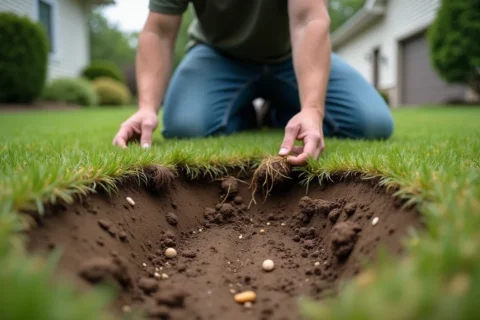
I walk the lawn with them during quoting, lifting a corner of the thatch mat with a knife to show the barrier their water and fertiliser are hitting. The analogy that lands best is pruning: you cut a rose bush back to wood to get better blooms. The lawn will look worse before it looks better because the process is working, not because it failed.
The waste problem that destroys margins
Scarification generates volume that surprises contractors who have not tracked it. A 100m² kikuyu lawn with moderate thatch produces 1-2 cubic metres of dense, damp organic material. Heavy thatch can push this to 5-15 times normal weekly clipping volumes. This is not grass clippings you can dump in a client’s green bin. It is matted, wet, and labour-intensive to handle.
Pricing this as part of the scarification fee means you lose money. Removal and disposal must be a separate line item, quoted by cubic metre, trailer load, or bakkie load. City of Joburg Pikitup garden waste tariffs run R200-R500 per cubic metre at landfill, before labour and transport. A single trailer load to a private waste facility can consume half a day’s labour for two men. Bundle this into a flat scarification rate and you either overcharge straightforward jobs or subsidise heavy thatch removals with your profit.
I offer three options in writing: client self-disposal at no charge; contractor removal at agreed rate per load; or skip hire arranged at cost plus management fee. Most choose contractor removal once they handle one wheelbarrow of wet thatch. Present the choice before the machine reveals the volume, not after the pile sits steaming on their driveway.
Recovery timelines and irrigation demands
The exposed soil and reduced leaf surface make scarified lawns vulnerable to desiccation. Immediate, consistent moisture is non-negotiable. For the first 1-2 weeks, light frequent watering, 2-3 times daily for 10-15 minutes, keeps the soil surface moist without washing away exposed soil. This conflicts with some municipal restriction schedules. In eThekwini, where watering is often limited to specific days, you need the client to understand this constraint before you scarify, not discover it after.
Gradually reduce frequency while increasing duration after initial establishment. Shift to every second day for 20-30 minutes to push roots deeper. Visible green fuzz typically appears within 1-2 weeks in warm conditions. Full recovery, dense and uniform, takes 4-8 weeks depending on season, soil temperature, and aftercare discipline.
Timing matters regionally. Late spring through early autumn provides the growing degree-days kikuyu needs to rebuild. Scarifying a Highveld lawn in late April means recovery through winter dormancy, with brown stubble persisting for months. I refuse autumn scarification jobs unless the client explicitly accepts this timeline in writing.
Fertiliser accelerates recovery significantly. A balanced slow-release product, Efekto 8:1:5 or Wonder 3:2:1, applied 1-2 weeks post-treatment, feeds new growth without the surge-and-fade pattern of quick-release alternatives. The fertiliser reaches soil directly, not trapped in a thatch layer, so application rates achieve their intended effect.
The follow-up that secures reputation
A WhatsApp message at 7-10 days, with a photo of the emerging green fuzz from a previous job for comparison, prevents the panic call. At 3-4 weeks, a brief check that watering discipline has held. This costs nothing and converts a transaction into a relationship. The clients who called me in panic three years ago now book scarification annually and recommend me to their complexes.
The long-term benefits sell the next job. Water penetrates instead of running off. Fertiliser works instead of feeding the thatch mat. Roots run deep enough to survive restrictions that brown neighbour lawns. The lawn becomes genuinely drought-resilient, not just drought-tolerant through irrigation dependence.
Scarification profit is not in the machine pass. It is in managing the client’s emotional journey from quote through brown phase to recovery. Sell the process honestly, price the waste separately, specify the irrigation commitment, and follow through. The alternative is explaining to an angry homeowner why their property looks destroyed, while your invoice sits unpaid.