
Wet grass slows a mow and turns a routine job into a bad cut, a dirty machine, and a site you may have to revisit later to fix the damage you caused the first time.
A homeowner sees rain that has stopped. A contractor sees soft soil, blades that will tear instead of cut, tires that will sink on the turn, and a deck that will pack up with green sludge before lunch. A professional will move the visit or split the site, even when the sky has cleared.
What wet grass does to the lawn
Wet grass behaves badly under a mower because the blade no longer stands neatly for the cut. It bends, slides, and tears. On kikuyu, that usually leaves shredded tips that brown off within a day or two. On buffalo, especially the softer LM types, the bruising looks worse because the leaf is broader and more obvious. Cynodon can look as if it was hacked rather than cut. Ryegrass and fescue show the damage too, just in a finer way.
The lawn also pays below the surface. When the soil is still saturated, every pass pushes air out of the root zone. Clay soils on the Highveld are the usual offenders, but any compacted site with poor drainage will suffer. Once the pore space closes up, water moves slower, roots work harder, and the grass sits shallow. A wet mow becomes next month’s thin patch, not just today’s ugly finish.
Ruts are the part homeowners notice first because they are visible. A front wheel that cuts a groove through a soft section leaves a strip that holds water, then settles unevenly. The next mow bounces across that dip, and you get a second pass of damage. On slopes, the turning marks can be even worse. A ride-on with a heavy deck can twist a corner of turf clean off if the ground gives way under it.
Disease pressure follows the injury. Torn leaf tissue and persistent moisture are exactly what dollar spot, brown patch, and red thread like. A wet cut does not cause every fungal problem on a lawn, but it gives them a much easier entry point. If you have already got shade, limited airflow, or a patch that stays damp under trees, mowing too soon just hands the problem a shortcut.
How to confirm the site is ready
The rain gauge is not enough. I can get to a property after the rain has stopped and still refuse the mow because the ground is nowhere near ready. The test is simple: walk the site.
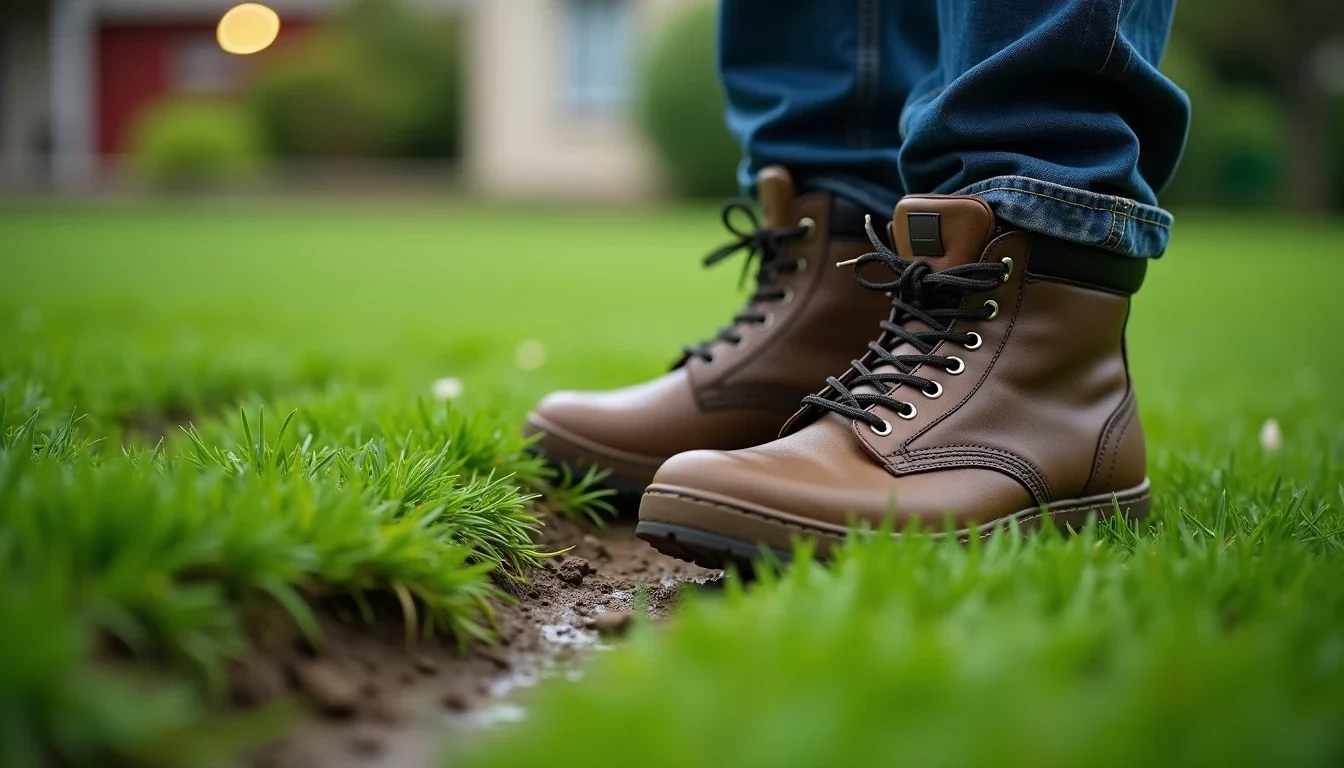
If your boots leave a clean footprint in the soil, it is too soon. If the lawn feels springy on top but squelches underneath, it is too soon. If a push mower drags in the turn or a ride-on starts leaving tire dents, it is too soon. A contractor does not need a laboratory for this; a few steps across the worst patch tell the story.
I also check the blades themselves. If dew or rain is still clinging to the leaf, the cut will smear. If the grass has dried on top but the shaded side of the yard still feels damp, I will often mow the dry section and leave the low, dark section for later or the next day. Large properties in Durban, the Garden Route, or any shaded coastal site often need that split approach.
The forecast matters too. If another shower is due in two hours, starting the job can be a trap. You spend the first half of the visit fighting clumps, then the rain returns and the second half becomes useless. That is billing a client for an unfinished mess.
What happens to the machine
Wet mowing punishes the mower faster than dry turf ever will. Grass sticks under the deck, chokes airflow, and starts collecting around the blade housing like felt. Once that happens, cutting quality falls off, and the machine has to work harder just to stay moving.
A petrol mower from Stihl, Husqvarna, Honda, Makita, Echo, MTD, or Tandem will all handle damp conditions better than a cheap machine, but none of them enjoy them. The engine labors, belts heat up, bearings take more abuse, and blades dull quicker. A blade that may run a full 20 hours in clean dry conditions can be ready for sharpening after 5 to 10 hours on wet, dirty turf. This means more downtime, more workshop visits, and more money out of the margin.
Cleaning is another hidden cost. A deck caked with wet grass can take 20 to 40 minutes to scrape, rinse, and reset after one property. Do that across several wet jobs in a day, and you lose an hour or more before you even count the lost cutting speed. For a small contractor running 30 to 100 sites a month, that is the difference between a schedule that works and a week that collapses.
Wet grass packs into every corner, wearing on wheels, chutes, and discharge paths. If it dries hard overnight, it takes longer to clear the next day and can rust metal parts if you leave it. Nobody sees that sort of maintenance bill when they ask why the visit got moved.
What a contractor should tell the client
Do not hide behind weather as a vague excuse. Explain the actual problem.
A clean message works better than a soft apology. Tell the client that the soil is still soft enough to compact, the cut will tear the leaf, the mower will leave clumps, and the site will need a second pass or follow-up repair if you force it today. That is a straight answer.
Every service agreement should carry a weather clause. Mine would read something like this:
“The Lawn Pro may reschedule a service when rainfall, saturated soil or standing surface moisture would damage the lawn, compromise the cut or damage equipment. Clients will be notified by SMS, WhatsApp or email with the next available service date.”
That clause protects the contractor from an argument on the day, and it tells the client that the standard is the finish, not the calendar. If you run a small team, put the same wording in your quote templates and recurring service terms. The client who reads it before the first rain is the client who complains less after the second one.
If the site is large enough, selective mowing can be the compromise. Dry frontage, dry verge, or a sunny section can be cut while the shade side is left alone. That is common on body corporate sites where the front lawn may carry but the back lawn is still soft after a night storm. You still have to be strict; one wet turning circle can undo the whole benefit.
Which grass types suffer most
Kikuyu handles abuse better than most lawns in the country, but it still looks rough after a wet mow. The coarse leaf tears easily when it bends under the blade, and the brown tips show fast. Buffalo is less forgiving in appearance because the leaves bruise and flatten. LM Berea can be especially awkward in damp shade because it stays cooler and wetter for longer.
Cynodon tolerates a lot, but it still leaves a cleaner result when dry. Kweek and patchy runner grass on a compacted site are a different story. If the soil is already tight, a wet pass can grind the problem deeper.
On the Cape side, fescue and ryegrass do not forgive sloppy timing either. The cut looks ragged, and the clippings smear across the surface. In KZN coastal conditions, where humidity lingers long after rain, the danger is not only the cut but also the long wet window that follows.
What to do next time
If you run maintenance or you manage one of your own properties, stop treating rain as the only question. Soil condition is the real question.
A simple decision rule works:
- If the soil leaves a footprint, wait.
- If the deck clogs on the first pass, stop.
- If the forecast shows more rain, reschedule early.
- If one area is dry and another is soft, mow selectively.
For contractors, the cost of waiting is usually lower than the cost of forcing the job. One wet cut can mean an extra blade sharpened at R120 to R180, a longer clean-down, a complaint from the client, and a lawn that needs recovery time. One skipped visit costs less than one bad one.
For homeowners, the point is simpler: a day’s delay does not hurt the lawn. A wet mow can.
This week’s checklist
- Walk the worst-drained part of the lawn before approving the mow.
- Check shaded corners, low spots, and turning areas, not just the driveway side.
- If boots sink or wheels mark, delay the visit.
- Ask for selective mowing only if the dry section is truly ready.
- Keep the weather clause in every recurring maintenance agreement.
- Budget for sharper blades and longer cleaning time if you run a team.
- On clay soil, give the site longer than your instinct tells you to.