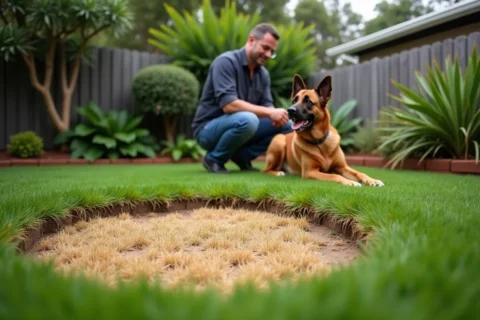

Pricing a kikuyu job like it is buffalo is the fastest way to blow a lawn quote. On paper, both look like green rectangles. On the ground, one is a hard-running thief of time, blade life, fuel, and edging hours, while the other sits there more quietly and asks for less punishment.
I have watched contractors lose money because they priced off a WhatsApp photo, a client description, or a quick drive-by from the gate. The lawn was “green, established, and fine” until the first mow turned up runners, shade pockets, mixed species, and a thatch layer thick enough to hide a shoe. If you do not know what grass is dominant before you quote, you are guessing the work and dressing it up as a price.
Identify the grass before you price the job
A proper first visit starts with your eyes and a blade of grass between your fingers. Look at leaf width, tip shape, color, runner type, how the lawn fills in bare spots, how much sun it gets, what the irrigation does, and what the previous owner has been doing to it. If you skip that step, every number after it is shaky.
Kikuyu, buffalo, LM Berea, and cynodon do not behave the same way. Kikuyu, Pennisetum clandestinum, throws both stolons and rhizomes and spreads with ugly confidence. Cynodon, including the bermuda and quickfix types, is also a runner machine, but with a much finer blade and a lower, tighter growth habit. Buffalo, Stenotaphrum secundatum, is broader, darker, and slower. LM Berea, Dactyloctenium australe, is often mistaken for buffalo by people who should know better, but it has a finer texture and a softer look.
If you cannot tell those apart, you cannot honestly tell the client what the mowing cycle will cost.
What to look for on site
Kikuyu usually shows light green color, a coarse feel, and folded leaves that sit around 3 to 5 mm wide. It spreads hard through thick runners and underground growth, which is why it escapes beds, edges, and compacted patches so quickly.
Buffalo is darker green, broader at roughly 5 to 9 mm, with blunt tips and a denser mat. It creeps by stolons, not with the same underground aggression as kikuyu, and it generally copes better with shade.
LM Berea sits in the middle visually. The leaves are narrower than buffalo, roughly 3 to 6 mm, and the plant feels softer underfoot. It also likes shade, and in many yards it shows up in areas the client thinks are “the same lawn” but are actually a different microclimate.
Cynodon is the fine one. Grey-green, tight, resilient, and usually happy where mowing is kept low. Once established, it handles drought better than most lawns people still insist on watering badly.
Cool-season mixes, usually ryegrass or fescue, deserve separate treatment. They can work in cooler or higher-altitude areas, but they do not behave like summer lawn grasses. Fine blades, quicker response to water, and poor tolerance for heat are part of the package.
Mixed lawns are not rare
Many properties are a patchwork, not one grass. The sunny strip by the driveway is kikuyu, the side passage is cynodon, the back corner under the tree is buffalo or LM Berea, and the client still wants one neat monthly price.
This is where contractors lose margin. The fastest-growing species tends to dictate the service interval for the whole site. If 70% of the lawn is buffalo but the other 30% is kikuyu in full sun, you do not get to price it like a buffalo-only property. The kikuyu will force the cutting cycle, the edging cycle, and the cleanup cycle.
I have seen a small kikuyu section double the handwork on a job. A lawn that looked calm in a WhatsApp photo turned into a heavier visit once the sun hit it and the runners started pushing. The client sees one lawn. The contractor sees labor, fuel, blade wear, and another half hour gone.
Sunlight and water tell you more than the client will
A grass identification job is incomplete if you ignore shade and irrigation. A lawn in full sun on the Highveld does not behave like the same species under trees in the Garden Route or in a sheltered KZN coastal yard. Sun, water, and history change the picture.
Full sun, roughly 6 hours or more of direct light, is where kikuyu and cynodon usually show their real appetite. Partial shade often favors buffalo and LM Berea. Deep shade can make even a decent lawn look sick because the grass is being asked to survive on scraps of light and uneven watering.
Irrigation matters just as much. A site with sprinklers that cover 80% of the area and leave one dry corner will always produce mixed stress signs. A contractor who prices from color alone will miss the dry corner, then blame the grass later.
Why identification changes the quote
The price is not only about treatment. It is about how long the crew will stand on the property, how often they will return, and how hard the machine will work.
Kikuyu and cynodon need more frequent mowing in the active season. In summer, weekly cutting is normal if you want to keep them tidy. In spring and autumn, many sites can stretch to every 10 to 14 days, but only if growth has slowed. Buffalo and LM Berea usually sit on a softer schedule. Fortnightly mowing in summer is common, and monthly visits can work in cooler months if the client is not demanding golf-course neatness.
That affects crew routing. It affects trimming time. It affects fuel. It affects the sharpenings on the blades.
A kikuyu site in full summer sun can easily mean twice the mowing and edging effort of a slower patch that looked similar from the gate. If you price both the same, the faster lawn will eat your margin.
Fertiliser and renovation are not one size fits all
Fast grasses are hungry. Kikuyu and cynodon will usually respond best to higher nitrogen feeding during their active growth period. Products in the 7:1:3 or 8:1:5 range are common choices, and a schedule of three to four applications a year is normal when the site is being managed properly. Buffalo and LM Berea usually need less. Two to three balanced feeds a year is often enough.
Overfeeding slower grasses creates trouble. Thatch builds up, softness disappears, and disease pressure goes up. That mistake costs more than the bag of fertilizer.
Renovation also depends on the species. Kikuyu and cynodon throw thatch quickly because they grow hard and spread aggressively. Annual or bi-annual dethatching is often part of the job. Buffalo and LM Berea usually need that work less often, sometimes every two or three years. Aeration follows the same logic. Dense, quick-growing lawns benefit more often from it than the slower ones.
For pricing, a contractor should not quote a renovation day until the grass type, growth rate, and thatch depth are known. A light spring clean on buffalo is not the same job as a proper kikuyu recovery on a neglected site.
A proper inspection beats the client story
Clients often describe what they want, not what they have. They will say “it is just lawn” and assume that settles the matter. It does not.
A useful inspection checklist is simple. Walk the site. Pull a few blades. Check leaf shape and width. Look for stolons and rhizomes. Note where the property sits in sun and shade. Ask about irrigation. Look for old mowing height, scalping, fertilizer burn, or pest damage. Then compare the problem areas with the healthy ones.
This is how you spot a mixed lawn. It is also how you stop underquoting.
A contractor who can identify a grass from ten paces is not guessing when they send a price. They know whether the job is a low-frequency buffalo maintenance site, a high-growth kikuyu churner, a shade-heavy LM Berea property, or a fine-bladed cynodon lawn that has been cut too high for too long.
What to charge for the real workload
In practical terms, the price should reflect mowing frequency, cleanup time, edge maintenance, fertilizer demand, and renovation risk. If a weekly kikuyu site needs a crew of two for 45 minutes and a monthly buffalo site needs one person for 30 minutes, those are not the same service even if the square meters are identical.
On small residential work, many contractors charge a premium once the lawn starts pushing aggressive growth in summer. For routine mowing, the difference between a simple buffalo maintenance visit and a kikuyu-heavy site can easily be R150 to R350 on a standard suburban property, depending on size, access, and clipping volume. Renovation work sits in a different bracket entirely. Dethatching, aeration, and recovery treatment can run from roughly R12 to R35 per m² depending on the condition of the turf, the equipment used, and whether the site needs follow-up visits.
Those numbers are not random. They reflect labor, machine wear, and time on site.
This month’s checklist
If you are quoting lawns this week or this month, do this before you talk price:
1. Identify the dominant grass on site, not from the gate, but with a close inspection. 2. Check whether the lawn is single-species or mixed. 3. Record sun exposure in full sun, partial shade, and deep shade zones. 4. Inspect irrigation coverage and dry spots. 5. Measure likely mowing frequency based on the fastest-growing grass present. 6. Price fuel, blade wear, edging, and cleanup separately in your head before you send the number. 7. If the lawn is kikuyu or cynodon, assume heavier summer work unless the site proves otherwise. 8. If the lawn is buffalo or LM Berea, do not overprice it on the assumption that every green lawn is a runner monster.
A quote built on unidentified grass is not a quote. It is a guess with a logo on it.