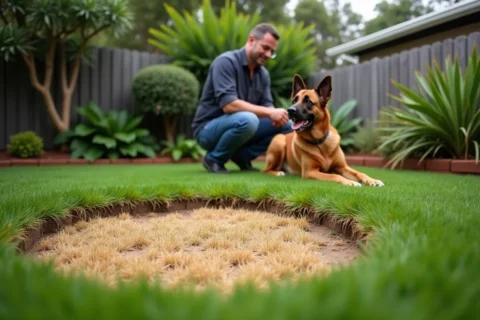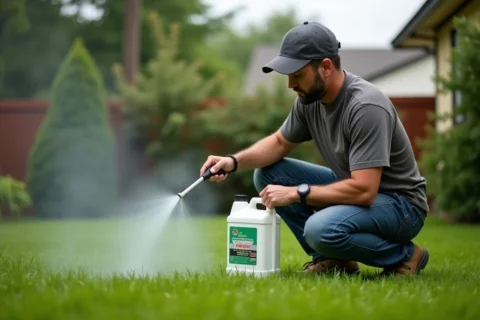

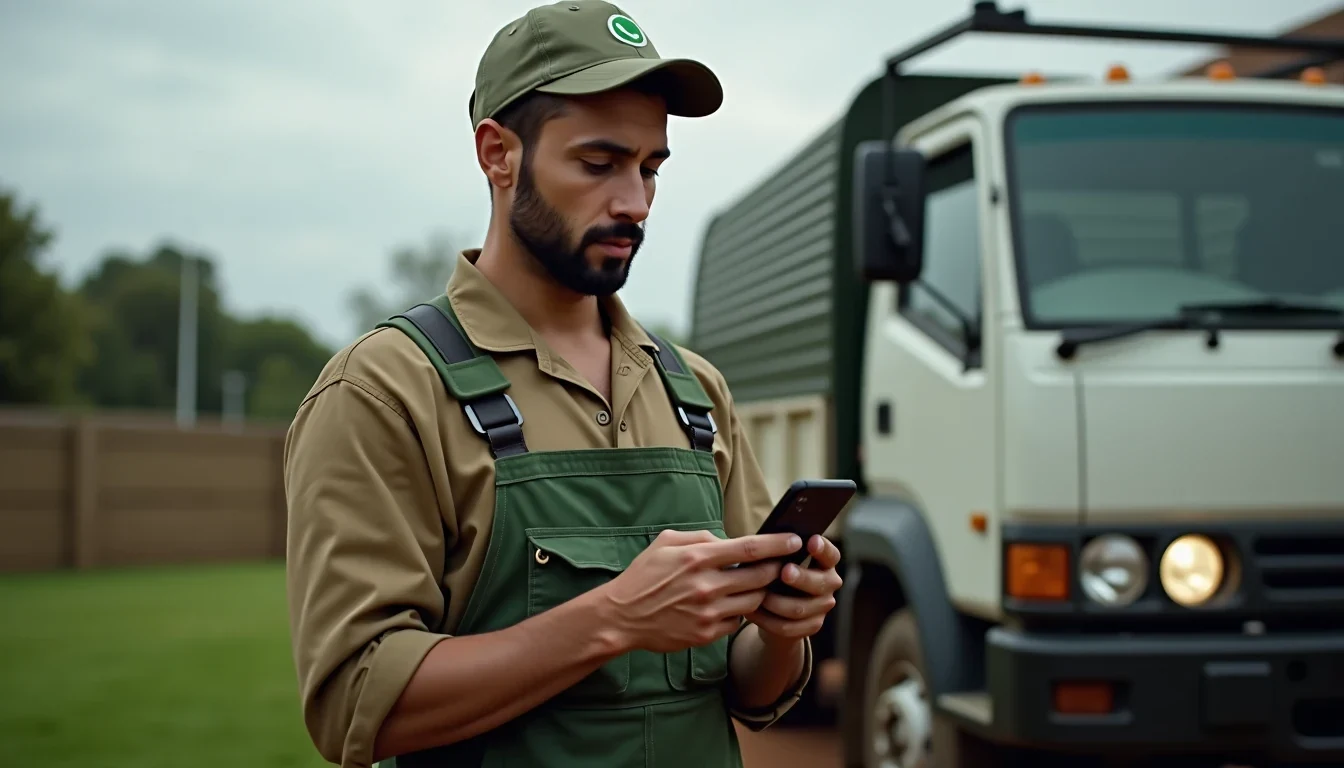
The message lands on WhatsApp at 14:47, three hours after you’ve packed the bakkie and moved to your next site. “Can the dogs go out yet?” Your thumbs hover. You were there this morning. You saw the client leave for work. You know she has two Jack Russells and a teenager who gets home at 15:30. But you told the gardener to keep everyone off “until later.” Later is not a time. Later is not a safety procedure. Later is a lawsuit waiting for a name.
Most SA lawn contractors expose themselves with written post-treatment communication, and they do not even know it. Verbal hand-offs to domestic workers, vague notes left on kitchen counters, or quick voice notes to clients who forward nothing to their families create gaps where poisoning happens. Dogs seize on treated kikuyu, and toddlers walk barefoot through bifenthrin residue at 16:00 because nobody told the mother-in-law who arrived at 14:00. The registered label governs what you spray. Your follow-up message governs what happens next.
What the message must contain
A proper post-spray communication is a record, not a reminder. It needs six elements, none optional.
First, name the products by brand and active ingredient. “Weed killer” means nothing in an emergency room. Write Efekto F-Bal (bifenthrin), Wonder 4-in-1 Weed & Feed (MCPA, dicamba), Talstar 100 EC (bifenthrin), or glyphosate spot treatment. The active ingredient is what the poison centre needs. The brand is what the client can produce if the container is already binned.
Second, timestamp everything: date, start time, finish time, and the specific areas treated. “Back lawn and driveway verge, completed 11:30.” Not “the garden.” Precision helps when a client rings you six weeks later claiming their buffalo grass died, and you need to establish whether you even treated that section.
Third, re-entry intervals stated as clock times, not durations. “24 hours” requires mental arithmetic. “Safe to enter at 14:00 tomorrow” does not. State separate times for general foot traffic, children, and pets. For most liquid applications on residential lawns, general re-entry runs 2-4 hours or until dry. Children and pets need longer. Efekto F-Bal and Talstar 100 EC both carry pyrethroid risk; cats in particular metabolise bifenthrin poorly. Wonder 4-in-1’s phenoxy herbicides can trigger vomiting and ataxia if a dog licks its paws after walking through residue. My own minimum for pets and children after any liquid broadcast application is 24 hours, regardless of what “until dry” suggests. For grazing animals, some labels extend to 48 hours. State it plainly.
Fourth, irrigation and mowing instructions tied to the chemistry. Bifenthrin needs time to bind to thatch and soil organic matter; watering too soon washes it through the root zone before it contacts target pests. Phenoxy herbicides like MCPA translocate through leaf tissue, so mowing within 48 hours removes the treated blade before the chemical reaches the root. Write: “No irrigation until tomorrow 14:00. No mowing until Thursday.”
Fifth, specific precautions for sensitive areas. If a pond was covered during application, state it. If the vegetable garden was excluded from the spray zone, confirm it in writing, because the client who asked you to “just be careful near the tomatoes” will forget they asked and will harvest anyway. Note if a neighbouring property was downwind, especially if you used anything with dicamba drift potential.
Sixth, emergency contact: your direct number, and the Tygerberg Poison Information Centre at 021 931 6129. Tell them to have the product name ready when they call.
Why “until dry” fails
Product labels on many residential-use chemicals specify re-entry as “until dry.” This is technically correct and practically dangerous. Drying time on Highveld winter grass at 09:00 with 30% humidity differs radically from a KZN coastal afternoon at 85% humidity on LM Berea thatch. A dew-heavy Cape morning can leave surfaces damp past midday. “Dry” is a condition, not a commitment. The client who checks at 16:00, sees surface dryness, and lets the dogs out has no way to know whether the chemical has bound to substrate or merely formed a thin, re-wettable film.
The person receiving your verbal message is rarely the person making the decision. You tell the client. The client tells the domestic worker. The domestic worker tells the teenager. By the third relay, “keep the dogs inside until tomorrow afternoon” becomes “the lawn guy said something about the dogs.” Written communication breaks that chain. It can be photographed, forwarded, pinned to the fridge.
The liability you do not see
South African common law negligence does not require you to cause harm directly. It requires that your conduct fell below the standard of a reasonable person in your position, and that this failure caused foreseeable damage. A contractor who applies Schedule 5 or 6 agricultural remedies without adequate post-treatment instruction is arguably below that standard before anything goes wrong. The Fertilizers, Farm Feeds, Seeds and Remedies Act and its regulations place the duty of proper application on the holder of the registration and, by extension, the person applying the product.
Your public liability insurer will ask one question first: “What did you tell the client?” If your answer is “I mentioned it to the gardener,” you have already lost. If your answer is a timestamped WhatsApp with product names, re-entry times, and a read receipt, you have a defence. The cost of that message is zero. The cost of its absence is unbounded.
How to build the habit
I send mine before I start the engine to leave site. A template lives in my notes app. It takes two minutes to customise product names, times, and specific warnings. I send it to the client, and if the client is not the sole occupant, I ask them to forward it to all adults in the household. I photograph the treated areas if there is any ambiguity about boundaries. I keep screenshots for three years.
For contractors running multiple crews, this is non-negotiable infrastructure. Your operator in the field is not you. His memory of what he said to which domestic worker is not evidence. A mandatory digital checklist, completed before the vehicle moves, creates the record that protects your company registration and your house.
What to do this weekend
If you currently rely on verbal hand-offs, build your template now. Test it on your next three applications. Refine based on client questions; if they ask, it was not clear enough. If you manage crews, make written follow-up a line item on your job sheet, checked by your supervisor before sign-off.
The chemical does its work in the soil. Your message does its work in the hours and days after, when you are already at another site, and the only thing standing between a safe lawn and a vet emergency is what you bothered to write down.