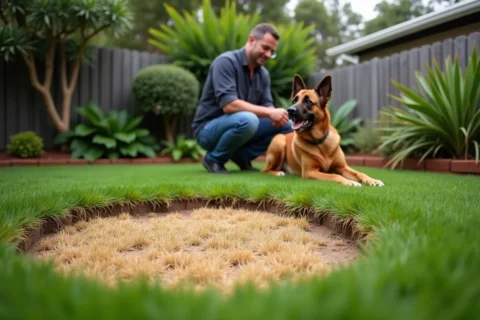

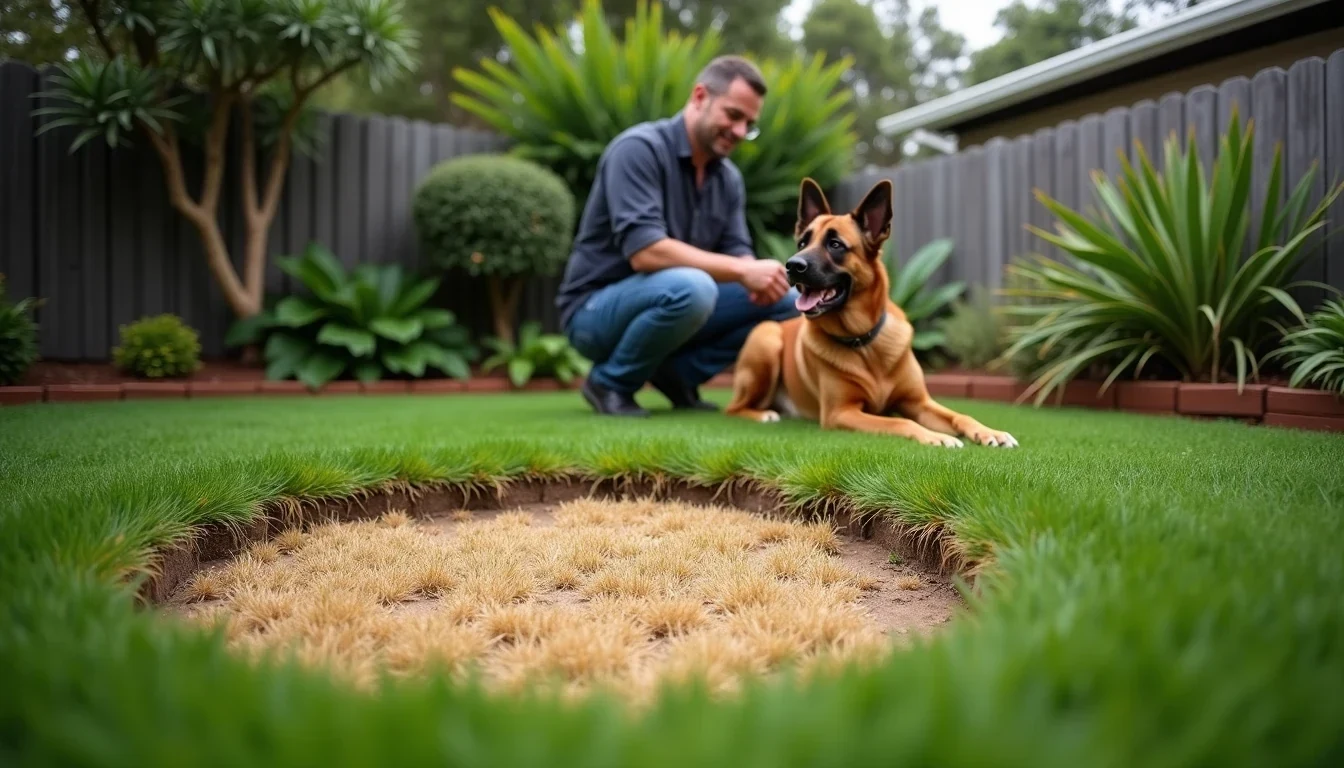
A contractor who promises a bowling-green finish to a household with three Labradors and a Jack Russell is either lying or has never watched a dog take a morning run. Urine burns will appear within a fortnight. The worn path along the fence will show bare soil by midsummer. The client will phone in October, furious, demanding to know why the new kikuyu has already failed. Nobody designed the space for the animals that actually live there.
Why Re-Turfing Fails the Same Way Twice
The pattern is predictable. A homeowner notices dead patches where the German Shepherd toilets. A contractor quotes R45-R80 per m² for fresh LM or kikuyu rolls, plus soil prep, plus labour. Six months later the same patches appear in roughly the same coordinates. The dog has not changed its route. The gate still sits where the gate sits. The fence line remains the shortest path from the kitchen door to the boundary wall.
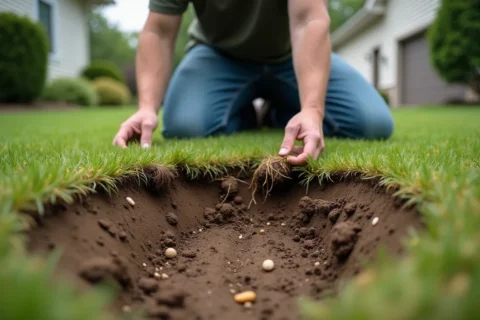
Repeated re-turfing without addressing traffic flow is a subscription service for disappointment, not maintenance. Each cycle costs more than the last because compaction worsens, soil structure degrades, and the client grows less willing to water properly when they have already watched one lawn die. By the third replacement, some contractors install drainage they should have specified the first time, or import topsoil to replace what compaction has ruined.
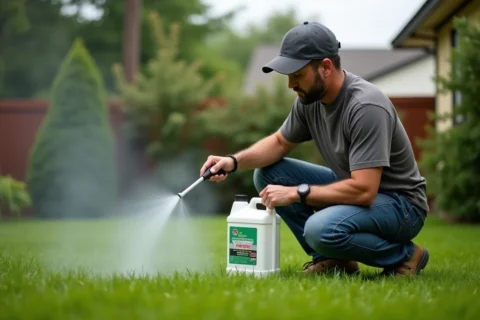
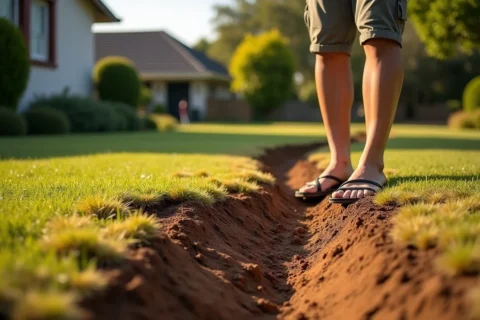
Physical damage breaks into three categories, each requiring a different response. Urine burn creates the most dramatic visual failure: a straw-coloured dead centre ringed by unnaturally dark, nitrogen-drunk growth. Soil compaction from repeated running along the same line kills grass more slowly, through oxygen starvation and runoff rather than chemical overload. Digging tears up irrigation and exposes raw soil to erosion. Treating all three as “lawn problems” misses the point. They are design problems wearing lawn-shaped symptoms.
Grass Selection for Households That Refuse to Choose Between Dogs and Turf
No variety survives abuse indefinitely. Some grasses recover faster, which is the only metric for a Rottweiler galloping the same circuit twice daily.
Kikuyu (Pennisetum clandestinum) remains the default recommendation for high-traffic dog yards, and for sound reason. Its stolons and rhizomes spread aggressively enough to fill divots within a single growing season, provided it receives adequate water and weekly summer mowing at 30-40mm. The trade-off is containment: kikuyu will invade flower beds, climb into pavement cracks, and attempt colonisation of neighbouring properties unless edge barriers are installed at 15cm depth. For a contractor, this means quoting the edging work honestly rather than pretending the grass will stay where it is planted.
Cynodon dactylon, sold locally as Quickgrass or common Bermuda, offers finer texture and comparable wear tolerance once established. It builds density through tillering rather than rampant stolon spread, making it easier to manage around formal landscaping. Winter dormancy is the drawback: it turns uniformly brown from May to August, so clients in the Highveld and Cape interior must accept this before installation. Cultivars like ‘Princess 77’ or ‘Sahara’ improve on the common type for density, though availability from SA turf farms varies seasonally.
LM Berea (Stenotaphrum secundatum) suits shaded yards where dogs still traffic the surface, but recovery from heavy damage takes noticeably longer than kikuyu. Contractors should set this expectation explicitly: LM will look acceptable longer under moderate wear, but a single weekend of concentrated activity (a children’s party, a visiting dog) will show damage that persists for six weeks rather than two.
Zoysia japonica, particularly cultivars like ‘Miyako’, represents the premium option. Establishment is slow enough to frustrate impatient clients: 18-24 months to full density in typical Highveld conditions. Once mature, its wear tolerance exceeds kikuyu and its water requirements drop significantly. The upfront cost runs 30-40% above standard varieties. Contractors serving the Pretoria or Durban northern suburbs market should know this specification for clients who ask once and want to stop asking.
Cool-season grasses (ryegrass, fescue) have no place in dog-traffic applications across South Africa’s warm-season zones. Their heat intolerance, higher water demand, and slower recovery from wear make them a false economy regardless of initial price.
Design Interventions That Outlast the Next Rainy Season
The most durable solution is often the least grassy one. Converting high-traffic strips to appropriate hardscape eliminates the failure mode entirely.
Worn routes along fences, gates, and the kitchen-to-garage line should become formal paths minimum one metre wide. Crushed stone compacted to 95% modified Proctor density, laid over geotextile, costs roughly R120-R180 per m² installed and survives indefinitely. Concrete pavers at R200-R350 per m² offer a cleaner aesthetic for visible entertaining areas. Either option beats the third re-turfing cycle on pure lifetime cost, and either option stops the phone call.
Designated toilet areas require more behavioural intervention but protect the remaining lawn from the worst nitrogen concentration. A 1.5m x 1.5m zone surfaced with river pebbles or coarse silica sand, positioned where the dog already prefers to go, can be trained within two to three weeks using consistent redirection and reward. The surface must drain: a 100mm gravel sub-base with agricultural drainage pipe to a soakaway or stormwater point. Contractors who omit the drainage layer will return to install it later, at greater cost and with a sceptical client.
For diggers, a dedicated sandpit satisfies the behavioural need without destroying turf. A 2m x 1m excavation lined with geotextile, filled with washed river sand, positioned in a shaded corner where the dog already shows interest. Bury a toy or treat to establish the association. The same terrier that excavates a kikuyu lawn will use the pit reliably if introduced correctly.
Strategic planting with dense, low shrubs (Carissa macrocarpa, dwarf syzygium) breaks up long straight runs across open lawn, forcing dogs to curve around obstacles rather than accelerate along fence lines. The planting itself must be robust enough to survive initial investigation: temporary wire cages for the first growing season prevent destruction by curious investigation.
Immediate dilution of urine spots with a full watering can of water remains the single most effective homeowner intervention for burn patch prevention. It requires no product purchase, no contractor visit, and approximately ninety seconds of effort. Most clients will not do it consistently. Contractors should mention it anyway, document the recommendation, and adjust expectations accordingly.
What to Tell the Client Before They Sign
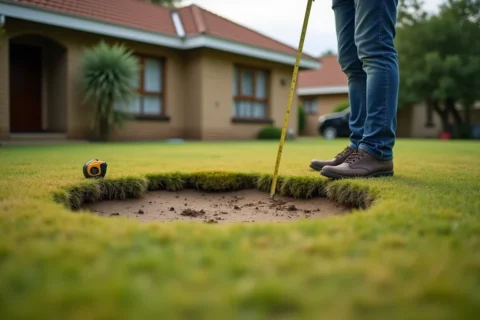
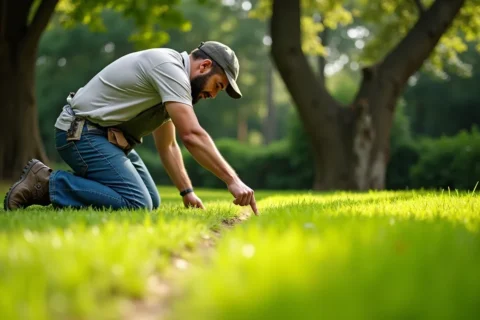
The initial site visit must include direct observation of existing traffic patterns, not just measurement of lawn area. Where does the dog run? Where does it pause? Where has the grass already failed twice? These questions shape the specification more than soil pH or irrigation coverage.
State the limitation plainly: a lawn that functions as kennel, playground, and delivery route will not achieve the aesthetic standard of a bowling green or a show garden. The goal is healthy, functional turf that survives the household’s actual use pattern. Any contractor who promises otherwise should prepare for the callback, the negative review, and the eventual dispute.
Present tiered options with real numbers. Option one: kikuyu re-turf with improved irrigation, R55-R85 per m², expected lifespan 18-24 months before significant repair needed. Option two: kikuyu with 40% hardscape conversion along primary traffic routes, total project cost 20-30% higher upfront, expected maintenance interval extended to 4-5 years. Option three: full redesign with zoysia, comprehensive hardscape, and designated activity zones, highest initial investment, lowest lifetime cost for the committed dog owner. Let the client choose their position on the cost-versus-convenience curve rather than forcing them into repeated emergency repairs.
Reference local products where relevant. Efekto’s Super Lawn fertiliser supports general turf health but will not prevent urine burn; design and dilution do that work. Stihl’s range of brushcutters handles the heavier mowing schedules that resilient grasses demand. These specifics signal regional competence more effectively than generic “quality products” assurances.
This-Month Checklist for Contractors
For the homeowner who called in September about the spring lawn failure: inspect the traffic patterns this weekend before quoting any replacement. Mark the worn routes with spray paint. Photograph the urine burn distribution. If the damage concentrates along the same lines as last year, specify hardscape or grass conversion, not another roll of turf.
For the contractor preparing body-corporate quotes: complex common areas with multiple dog-owning units need formal path specifications from the outset. The cost of pre-emptive crushed stone paths through high-traffic zones is recoverable in reduced maintenance tender prices over a five-year contract term.
For your own yard, if you keep dogs: walk the perimeter after the first autumn rains and note where the grass has thinned to bare soil. That is your design brief for winter hardscape installation, written in dead turf before you spend another season fighting biology with optimism.