
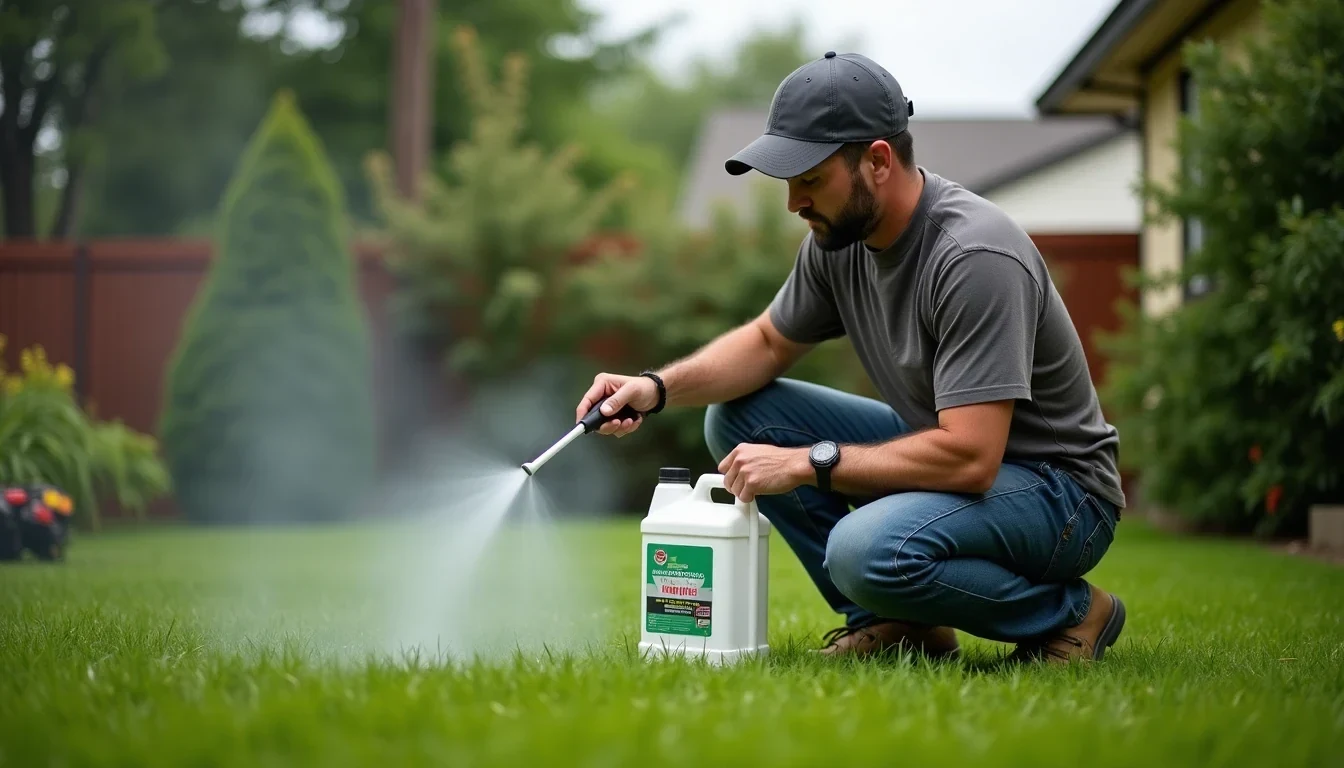
Every contractor who has ever stood over a sprayer tank with a stubborn oxalis problem has felt the pull. The label says 15 ml per 10 litres, but the weed is thick and the customer wants results before the weekend braai. So you nudge it to 20 ml, maybe 25. You tell yourself experienced operators know when to push the rate. That small decision has ended more lawn care businesses than slow winters ever have.
The Law Is on the Label, Not in Your Gut
Act 36 of 1947 does not recognise your gut. The Fertilizers, Farm Feeds, Agricultural Remedies and Stock Remedies Act makes the product label a legally binding document, and every registered herbicide carries an L-number to prove it. That L-number means the Department of Agriculture, Land Reform and Rural Development has tested the product under specific conditions and found it safe and effective only within those parameters. Stray outside them and you are breaking the law; the law does not distinguish between ignorance and arrogance.
The label conditions are exhaustive for a reason. They specify which turf species can tolerate the active ingredient, the exact mixing rate per 100 m², the temperature window for application, the growth stage of both weed and turf, and the waiting period after mowing or before rainfall. A broadleaf herbicide safe for kikuyu at 22°C can torch buffalo grass at 28°C, even at the correct rate. Cynodon under heat stress absorbs chemical differently than cynodon in active growth. These are not suggestions. They are the boundaries within which selectivity exists, and selectivity is the entire point of a selective herbicide. Cross the boundary and you no longer have a selective herbicide. You have a general biocide, and your customer’s lawn is in the blast radius.
What the Damage Actually Costs
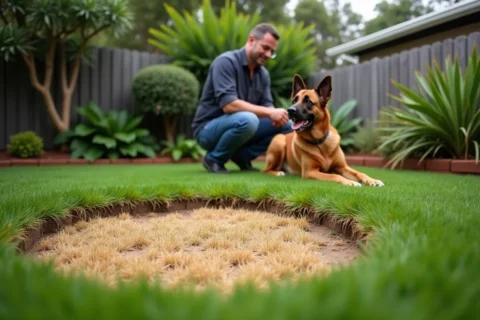
The financial mathematics of an over-mixed application are brutal. Kikuyu sod runs R50 to R150 per square metre depending on your supplier and haul distance. A standard suburban lawn of 400 m², completely browned off by a hot mix of pyrimidine sulfonylurea or phenoxy herbicide, means R20 000 to R60 000 in material alone. Add rip-out labour at R35 to R50 per m², soil remediation if the root zone is chemically scorched, re-establishment irrigation, and the weeks of return visits to nurse the new sod through establishment. You will absorb all these costs because you have no legal standing to defend an off-label application.
Then the second invoice arrives. Word travels in estate WhatsApp groups faster than fungal patch disease. One before-and-after photo of a dead lawn, captioned with your company name, circulates to three hundred homeowners while you are still loading your trailer. The referral pipeline dries up. Your Google Review average drops below 4.0 and your quote-to-close rate falls through the floor. The job you tried to save by mixing heavy has now cost you six months of revenue.
Regulatory fines under Act 36 compound the damage. Inspectors from DALRRD can demand your chemical register during any site visit. Missing labels, absent SDS sheets, or application records that show rates above specification become evidence in an administrative offence. Fines escalate quickly, and repeat contraventions can threaten your business registration entirely.
Build a Register That Protects You
A chemical register is not a spreadsheet you update when you remember. It is the documentary evidence that you are a professional operator, and it needs four living components to pass scrutiny.
First, current product labels for every herbicide in your store, archived with their L-numbers and active ingredient concentrations. Second, safety data sheets for each product, accessible to every employee who handles chemical or responds to a spill. Third, application records that note date, site address, product used, batch number, mixing rate, area covered, weather conditions including temperature and wind speed, and the applicator’s name. Fourth, secure, ventilated storage that keeps herbicides away from fertilisers and fuels, with inventory tracking that flags expiry dates and opened containers.
The application record is your shield in a dispute. A homeowner claims your treatment killed their LM Berea. You produce the record showing you applied a product registered for LM Berea at 18°C with no wind, at the label rate, on turf established for fourteen months. The damage was likely fairy ring or nematode stress, not your application. Without that record, you are negotiating against yourself in a vacuum.
When Chemical Is the Wrong Tool
The hardest skill in weed control is recognising when not to spray. Some situations reward chemical intervention. Others punish it, and the punishment is disproportionate.
Hand removal remains the correct choice for isolated broadleaf weeds in a newly established buffalo lawn, where any herbicide stress layers onto establishment stress. A dandelion in a 50 m² courtyard is a ten-minute job with a fork. The same dandelion sprayed with a heavy mix of 2,4-D in summer heat becomes a dead patch that takes six weeks to fill, if it fills at all.
Improving lawn density is the longer play that reduces chemical dependence. A kikuyu sward mown at 30 mm with adequate nitrogen and deep, infrequent irrigation to 25 mm depth crowds out annual weed germination. Cynodon at 15 mm with seasonal scarification and top-dressing builds a mat too tight for oxalis to penetrate. These are not organic affectations. They are operational decisions that lower your chemical cost per site and eliminate the margin-for-error that comes with every spray pass.
Contractors running thirty to a hundred sites monthly should track their herbicide cost per square metre across the season. A rising trend often indicates thinning turf, recurring weed pressure, or applicators compensating for poor coverage with heavier mixing. The register will show which. The numbers do not hedge.
This Weekend’s Checklist
Pull your current herbicide stock. Verify every label has a legible L-number and matches your register. Discard any product where the label is faded or detached; you cannot comply with a label you cannot read. Check your SDS files against the products on your shelf. If you have added a new active ingredient this season, ensure every applicator has read the relevant sheet and signed acknowledgement.
Calibrate your sprayers. A nozzle worn to 15% above its rated output, combined with a mixing rate already at label maximum, pushes you into overdose on every pass. Measure actual output per 100 m² on concrete, adjust walking speed or pressure, and record the calibration date.
Finally, walk your worst weed site from last month. If the turf is thin, schedule aeration and top-dressing before you schedule chemical. Density is your cheapest insurance policy, and the only one that appreciates over time.