
A kikuyu lawn browning off in October is not a mystery. Every contractor has watched a homeowner spend R800 on fungicide and insecticide, then call back two weeks later because the patches spread. The real cause was a 19mm PVC joint leaking under the buffalo grass, or a rotor head watering the driveway while the adjacent 3m² starved. Irrigation runs at 04:00. Nobody sees it fail.
The symptoms overlap perfectly. Drought-stressed Pennisetum clandestinum wilts and thins exactly where mole crickets have been active. Waterlogged Stenotaphrum secundatum yellows from anaerobic roots in a way that reads as nitrogen deficiency. Irrigation faults leave geometric patterns: circles around blocked nozzles, stripes where head spacing failed, wet paving with dry grass beside it. Disease and pests do not respect your sprinkler layout.
Why the Misdiagnosis Sticks
Contractors spot irrigation problems while mowing because the system is invisible to the homeowner. The timer clicks on before dawn; the only evidence is the result. A leaking pipe can dump 15,000 litres monthly into a single 4m² zone, breeding fungus in that spot while leaving the upstream area parched. A tilted spray head throws half its water onto a boundary wall, creating a crescent of dead kikuyu that looks exactly like brown patch.
The research on this is straightforward and ignored. Dry patches from insufficient coverage mimic dollar spot or early grub damage. Saturated zones from leaks produce root rot indistinguishable from soil-borne pathogens. The homeowner sees failure, assumes biology, and reaches for Efekto Kumulus WG at R180 per 200g or Talstar 100 EC at R350 per 100ml. The chemicals do nothing. The grass keeps dying. The irrigation keeps failing.
Even some small contractors fall into this trap. They do not carry catch cans. They quote a disease treatment, collect, and move to the next of their 60 monthly sites. The fix would have been a R45 nozzle swap or a R120 PVC repair coupling.
The Audit That Settles It
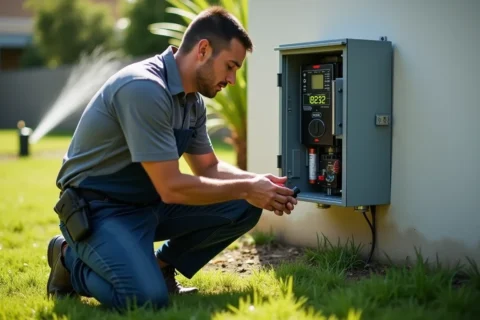
You need two things: eyes, and containers that measure. The visual inspection happens first, with the system off. Walk every zone. Look for heads tilted by mower impact, nozzles packed with sand from borehole water, wet spots that never dry, and the classic tell of a rotor watering paving while missing grass by half a metre. In hard-water areas of Gauteng, calcium buildup chokes nozzles to a fraction of their design flow. In coastal KZN, sand and insect nests do the same job.
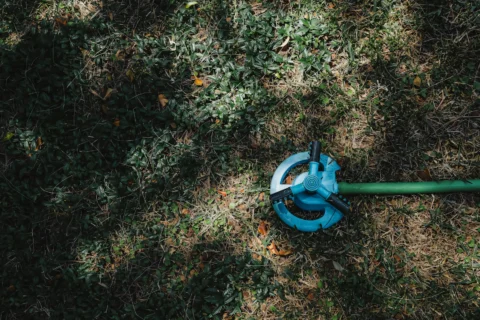
The catch-can test gives you numbers that end arguments. Collect 10 to 20 identical straight-sided containers: tuna cans, pet food tins, purpose-made gauges. Straight sides matter. Tapered cups distort the depth reading.
Place them in a grid across one zone, including positions near heads, midway between heads, and at coverage edges. Put containers in both healthy grass and damaged patches within the same zone. Run that zone for 15 minutes. Measure depth in millimetres with a ruler. Record every position.
Calculate the average for the zone. Then compare healthy-area averages against damaged-area averages. A 50% shortfall in the brown patch is not a fungus. It is a mechanical failure wearing biological clothing. I have seen 8mm in the green strip and 2mm in the dead zone from a single blocked nozzle. No chemical fixes that gap.
What the Numbers Point To
Uneven collection across all containers suggests system-wide pressure problems: municipal supply fluctuation, simultaneous zone operation, or pipe diameter too small for the design. Localised dry spots point to blocked nozzles, damaged heads, or misaligned spray patterns. Localised wet spots mean leaks in PVC, failed head seals, or a valve not closing fully.
Head-to-head coverage is the design standard. Each sprinkler’s throw should reach the next head. When pressure drops or nozzles clog, that overlap disappears and dry diamonds form between heads. The homeowner sees a disease pattern. The contractor with a ruler sees a hydraulic failure.
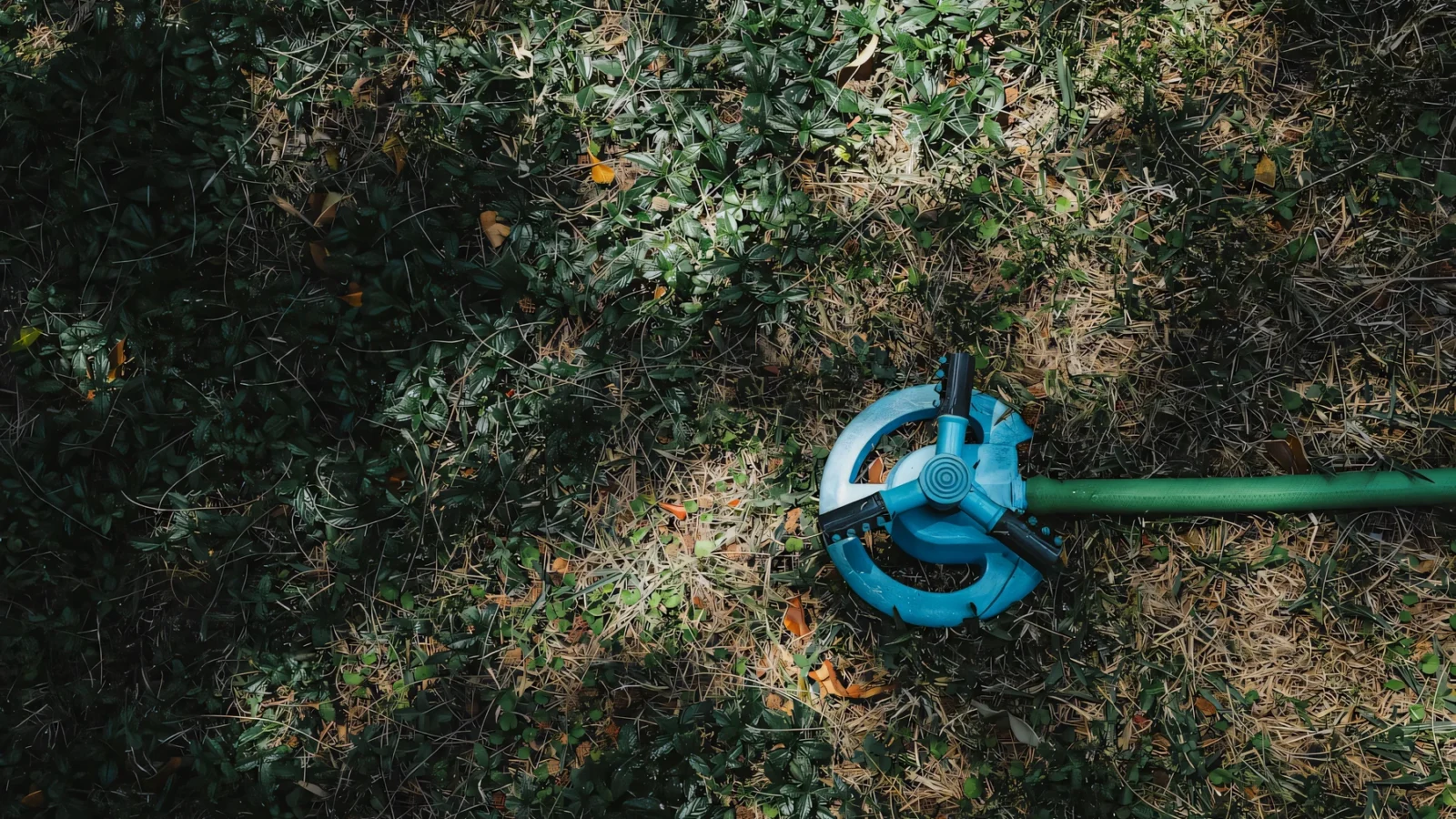
Misaligned heads are the most embarrassing find because they are the most obvious. A rotor tilted 15 degrees by a mower tyre throws 30% of its water into a garden bed or onto paving. The grass beside the paving dies. Someone applies Wonder Lawn & Leaf at R130 per 500ml for “iron deficiency.” The iron was never the problem. The water never arrived.
Fixing What You Find
Blocked nozzles: unscrew, rinse in clean water, poke with a soft wire if needed. Replace if orifice is damaged. Cost: R35 to R85 per nozzle depending on brand. Time: five minutes.
Leaking pipe: excavate, cut out damaged section, insert repair coupling with PVC cement. A 19mm coupling costs R12 to R25. A contractor will charge R400 to R700 including labour for a straightforward access job. Compare that to R800 in wasted chemicals plus the replacement sod or seed for the dead area.
Low pressure: check whether multiple zones are programmed to overlap. Stagger start times. If municipal pressure is chronically low, a small booster pump on the irrigation line solves it. A 0.37kW booster runs R1,800 to R3,200 from most agricultural suppliers. For contractors managing 80 sites monthly, this is a stock recommendation to homeowners on marginal supply.
Misaligned heads: straighten, check that the head sits at grade, adjust arc and radius with the manufacturer’s tool. Most rotors include the adjustment key. If not, a universal key costs R45.
The Cost Reality
Immediate savings from correct diagnosis are direct and calculable. A standard misdiagnosis runs R600 to R1,200 in chemical treatments that were never indicated. The lawn continues to decline during the wasted application window, so re-sodding or re-seeding costs pile on top. A proper audit and targeted repair typically runs R200 to R800 in materials and labour, depending on fault severity.
Long-term water savings matter more on large properties and body corporate sites. A single leaking 19mm joint can waste 20,000 litres monthly. At Johannesburg 2024 municipal rates of roughly R25 per kilolitre above the free allowance, that is R500 monthly in water alone. The leak costs more than the repair in under two months.
Healthier turf from even coverage resists actual disease pressure. Kikuyu mown at 30mm with consistent 25mm weekly water depth develops thatch and density that outcompetes weeds and tolerates pathogen spore loads. Stressed, patchy turf with wet and dry zones is already compromised when any real disease arrives.
This Weekend’s Checklist
Saturday morning, before the timer runs, walk every zone with a notebook. Mark heads that spray hardscape, spots that stay wet, and the geometry of every brown patch. Saturday afternoon, set your catch cans. Sunday morning, run the system and measure. By Sunday noon you will know whether you need a R45 nozzle or whether you actually do have a pest problem worth treating.
If you are a contractor, build this into your October site visits. The lawn failure season starts when irrigation systems switch on after winter dormancy. Catch the pressure drop, the cracked pipe from frost heave, the head knocked by the first mow. Quote the fix before the homeowner quotes themselves a R900 chemical bill.
The grass does not lie. It just speaks in water depth, measured in millimetres, at 06:00 on a Sunday. Learn that language and you stop wasting money on conversations it cannot hear.