

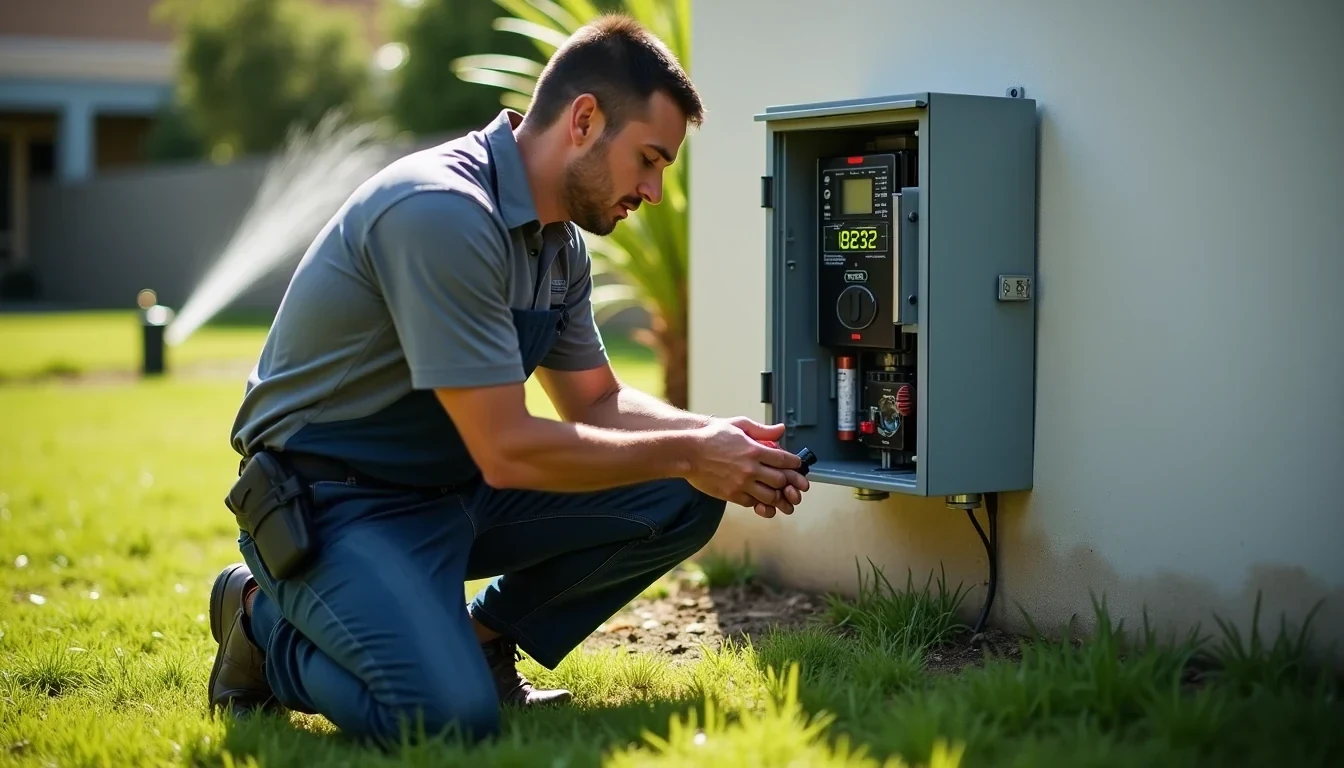
Cape Town punishes sloppy irrigation work in the least glamorous way possible. A sprinkler that starts running at midday because the controller forgot the time after a power cut looks like someone programmed a fine and handed the municipality the evidence.
I have seen this exact mess after load shedding, after a brief outage, and after a gardener “just changed the battery” without checking the clock. The lawn is not the problem; the controller is. If you install or service irrigation here, the timer is not a convenience. It is a compliance device.
The timer drift
The City’s permanent watering rules do not wait for drought headlines. Garden irrigation is restricted every day of the year, and many contractors get lazy, assuming the client’s preferred schedule is the schedule that counts. It is not.
The real risk starts when the controller loses its clock. Many units keep time with an internal real-time clock and a small backup battery. Some use a CR2032 coin cell, others a 9V battery. If that backup is flat, missing, or ignored for years, a power interruption can push the unit back to a default time or a useless clock setting. When power comes back, the system may resume exactly when it should not. Midday watering is the classic failure.
This is not a theoretical problem. It is the sort of fault a neighbour notices from across the street, especially when a sprinkler is throwing water onto paving at 12:15.
The watering window
Cape Town’s watering rules are not written for your convenience. They are written to cut evaporation and stop daytime watering from wasting water when the sun is at its worst. For lawns and gardens, the hard ban runs from 09:00 to 18:00. This applies even when there is no special drought emergency in play.
For municipal water users, the rules can go further than just the clock. Day-of-week watering limits and volume limits can also apply, depending on the current municipal position. A contractor who only checks the client’s memory of “we water on Tuesdays” is setting himself up for an argument.
The practical point is simple: if you programme a system, you need to know the current municipal requirements before you press save. Not last summer’s rules, not the client’s old routine, but the current rules.
When the outage rewrites the schedule
A brief outage should not make a good controller misbehave, but cheap or aging units do it all the time. Even the better ones can lose their time setting if the battery support is weak. Some keep the program and lose only the clock. The station list looks correct, the run times look correct, and the thing still fires at the wrong hour.
This is how a contractor gets dragged into blame. The owner gets the fine first. The neighbour reports the watering, or the pattern is visible from the road, and then the person who set up the system gets the call. If your name is on the invoice and you last touched the timer, you will be asked why the sprinklers were on at midday.
I do not accept the excuse that “the power went off, so what could we do?” The answer is batteries, better controllers, and a proper handover. If you sell irrigation work and do not explain what a blackout does to the clock, you have left the job half done.
How source changes the rules
Water source changes the detail, but it does not erase the need to check the rules.
Municipal water is the tightest lane. It usually carries the full package of time restrictions, plus any current day-of-week or volume limits.
Borehole and wellpoint systems are treated differently, but they are not a free pass. They must be registered where required, and non-potable signage needs to be visible. A small blue notice, typically 150 mm by 150 mm with clear white lettering, is the sort of thing people skip until an inspector or a neighbour makes it a problem. Even where a borehole is exempt from some municipal watering limits, the daytime garden watering ban is often still the rule contractors program around.
Greywater and rainwater systems are the same story with a different label. They can be more flexible on volume and frequency, but that does not mean you ignore the time restriction and hope nobody notices. The City can change the practical rules, and a contractor who has not checked the current position is guessing. Guessing is not a compliance strategy.
The ugly truth is that the water source does not protect you if the controller starts at the wrong time. A borehole sprinkler running at 13:00 still looks like a contractor error from the street.
Handover check
A proper handover takes longer than most clients think. I check the time on the controller against a phone clock, then I check the date, because some machines roll the calendar back as well. I run each station briefly and confirm the start window. I test the backup battery, not just whether it is present. If it is an older unit, I price the battery replacement into the visit instead of pretending it will survive another season.
On Cape Town jobs, I also set watering windows that leave no room for accidental daytime starts. If a residential client is using municipal supply, I keep the schedule outside 09:00 to 18:00 and I make the start time painfully obvious. If the controller allows seasonal adjustment, I use it. Summer and winter do not need the same run time. A kikuyu lawn, especially Pennisetum clandestinum on an exposed stand, needs correct depth, the right hour, and a controller that does its job.
For reference, a CR2032 battery usually costs about R20 to R60, a 9V alkaline can sit around R35 to R90, and a service call to reset, test, and document an irrigation controller often lands somewhere between R350 and R850 before travel. If a controller is old enough to lose time every time the power blips, a replacement unit can be cheaper than repeated callouts and complaints.
Keep timer honest
A contractor who wants fewer arguments should do four things every time.
First, verify the current municipal watering rules before programming anything. Do not rely on memory.
Second, check the clock retention after every power interruption. If the controller reset once, it may do it again.
Third, replace weak backup batteries before they fail on a hot day when nobody is watching.
Fourth, tell the client what the controller will do after a blackout. If they know the unit may drift or restart incorrectly, they can spot trouble before the neighbour does.
For body corporates and rental properties, this is even more important. Sites change hands, gardeners change, and nobody remembers who last touched the timer. The contractor who leaves a short written handover note gets fewer phone calls. If the site has municipal, borehole, and rainwater zones mixed together, label them properly and do not assume the next person will know the difference.
This weekend checklist
Check every controller you service for four things: correct time, correct date, healthy backup battery, and watering starts outside 09:00 to 18:00.
If you manage a Cape Town property, walk the system after the next power interruption instead of assuming nothing changed.
If you are the contractor, price a battery change, a reset, and a compliance check into your next irrigation service. It is cheaper than explaining to a client why the sprinklers were on when the street was full of witnesses.