
Six weeks of missed mowing does not disappear in 40 minutes, no matter how convincing the client sounds on the phone. If you drop a mower straight to the requested height and try to “finish the job” in one pass, you strip off the useful leaf, expose pale stem tissue, and leave the turf looking battered. This is scalping, not a tidy lawn.
Kikuyu, Pennisetum clandestinum, makes the mistake worse. The top of the plant carries most of the green leaf, and the lower layer turns into a thick, spongy mat of runners and older tissue. Once it has been left to run for weeks, cutting it down to a normal maintenance height in one go can remove almost everything green and leave the client staring at a brown, hollowed surface.
What scalping actually does
What it is
Scalping is what happens when the mower takes the grass below the point where the plant still has enough leaf to feed itself. You are stripping away the plant’s engine, not just trimming a lawn.
The damage is immediate. The pale stems that were hidden inside the canopy suddenly show through. Those stems do very little photosynthesis, so the plant loses most of its energy supply in one visit. A weak lawn also drinks more water, closes up more slowly after traffic, and leaves open space for weeds, disease, and bare patches.
On Kikuyu, the problem is worse because the stand can grow fast and top-heavy between visits. In a warm Highveld summer, it can push hard enough to make a fortnightly cut look lazy. Leave it longer than that and the upper leaf sits above a dense, lower layer of old tissue and runners. Then the blade goes in, the green goes with it, and the client gets a cut lawn that looks injured.
How to confirm
Walk the site before you start the machine. If the lawn feels springy underfoot, looks uneven in height, and shows pale material in the lower half of the canopy, do not promise a single clean-down cut. Kikuyu gives itself away because the top is soft and green while the bottom feels thick, packed, and slightly woody.
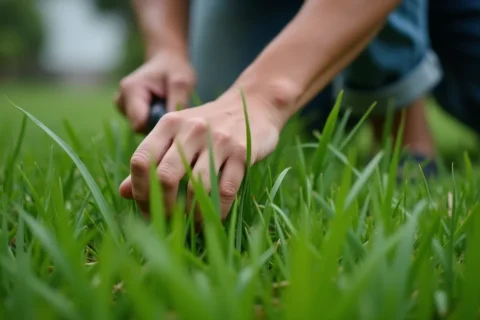
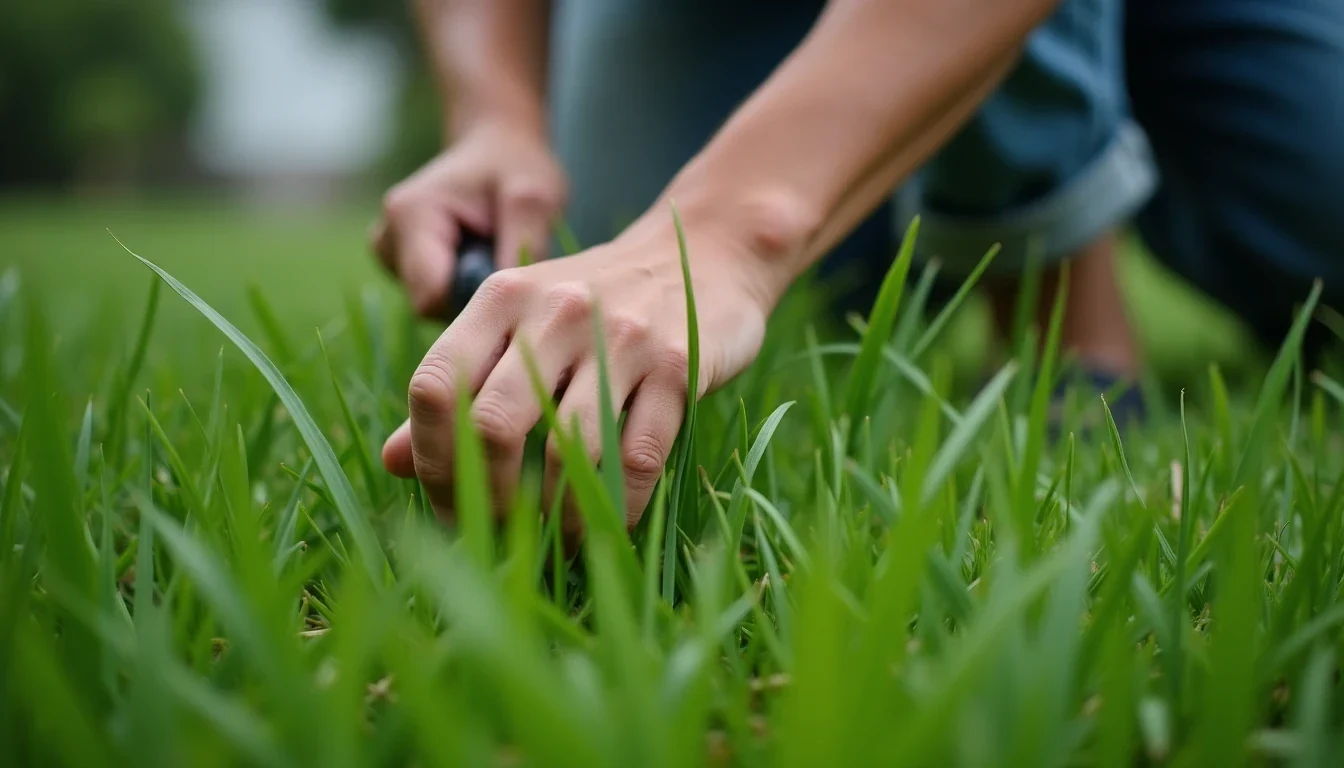
Part the grass with your hand. If you can see that most of the colour sits high in the leaf and the base is pale or straw-like, the lawn is already telling you that one heavy cut will be too much. If you can smell old clippings, see thatch, or spot runners sitting above the soil, you are looking at a corrective job, not a routine mow.
How to reduce it in stages
What to do first
The first corrective visit should remove only a portion of the height, not the whole problem. The one-third rule is the simplest way to keep the grass alive while you reset it. If the lawn is sitting at 120 mm and the target is 35 mm, do not try to take it there in one sweep. Bring it down to roughly 80 mm first, then allow recovery before you lower it again.
That first pass will often look untidy. The finish may be uneven, with stems still showing and some leaf left longer than the client expected. This is normal. A corrective cut is not the same thing as a maintenance cut. The goal is to keep enough leaf on the plant to rebuild.
How to pace the follow-up
Give the grass 3 to 5 days to recover before the next reduction. Then lower the mower one setting or take off another controlled slice of height. Repeat that pattern until the lawn is back in its proper maintenance range.
For Kikuyu, that usually means ending somewhere around 25 to 40 mm on a domestic site, depending on shade, water, and how hard the owner wants to push it. I would rather leave a recovering lawn a little high for a week than shave it and spend the next month pretending the damage was part of the plan.
What equipment and treatment help
Use sharp blades. A dull blade tears the leaf and makes already-stressed turf look worse. Bag the clippings on the first heavy passes so the cut material does not sit on top of the lawn and smother the regrowth. Mulching can return once the stand is back under control.
A light watering after each cut helps the lawn recover, especially if the weather is hot and dry. Do not flood it. The point is to reduce stress, not create a soft, wet mat that invites fungus.
After the second or third pass, a balanced liquid feed can help the grass push new leaf. Products such as Efekto Plant Food 3:1:5 or Wonder 5:1:5 are common enough for domestic work. Follow the label rate, because a corrective cut is already stressful enough without adding fertiliser burn to the list.
What to tell the client
How to set the expectation
Say it plainly before the first cut starts. A lawn that has been ignored for weeks will not look finished after one corrective visit. If the client wants the place to look like a showpiece by lunchtime, they are asking you to trade grass health for a neat photo.
That conversation saves arguments later. The person paying for the work usually wants the lawn to look as though the neglect never happened. The grass does not share that fantasy. It will show the cut, show the stress, and show the recovery period. That is the job.
Why photos matter
Take photographs before you touch the lawn. Get wide shots from several angles so the full site condition is recorded. Get close-ups of the blade length, the pale base, the thatch, and any problem patches. Photograph irrigation heads, edging, stones, lighting, bare areas, and anything else that can be damaged during the work. Add a scale reference in at least some of the close shots so nobody can argue later about how long the grass actually was.
Date and time stamps help. So does a clear photo trail from the starting condition to each stage of the job. If the client later complains that the first visit looked rough, the pictures show exactly what was there before the mower started.
I keep those photos because the story is almost always the same. Someone has missed six weeks of maintenance, then wants the site corrected in one short visit without the grass showing it. That is not lawn care. That is denial with a rake.
How to stop repeat callouts
Reset the schedule
Once the grass is back at the right height, lock in a schedule the site can actually support. On vigorous Kikuyu, that may mean weekly mowing through the hot growing months on the Highveld or the KZN coast. Leave it for 14 days and the cycle starts drifting back toward trouble. In cooler areas, the interval can stretch a little, but the principle stays the same. The more growth you allow, the more likely you are to end up correcting a mess instead of maintaining a lawn.
For contractors, this is where the real money sits. A corrective visit is more labour, more time, more blade wear, and more explaining. A steady maintenance route is cheaper to run and easier to price.
Price it as corrective work
Do not quote an overgrown lawn as if it were a normal trim. A site that needs staged reduction should be priced as a corrective job with more than one pass built in. The client is paying for recovery work, not a quick cosmetic sweep. If you underquote it, you are the one donating time to somebody else’s neglect.
This week’s checklist
- Walk the site before mowing and identify whether the grass is Kikuyu, buffalo, cynodon, or a mixed stand.
- Photograph the lawn from wide angles and close range before the first cut.
- Cut high on the first pass and remove no more than about one-third of the height.
- Bag the clippings on the early passes.
- Return after 3 to 5 days for the next reduction.
- Keep the blade sharp and the target height realistic.
- Tell the client upfront that the first visit is a reset, not a showroom finish.
- Reset the maintenance cycle once the lawn is back in range.