

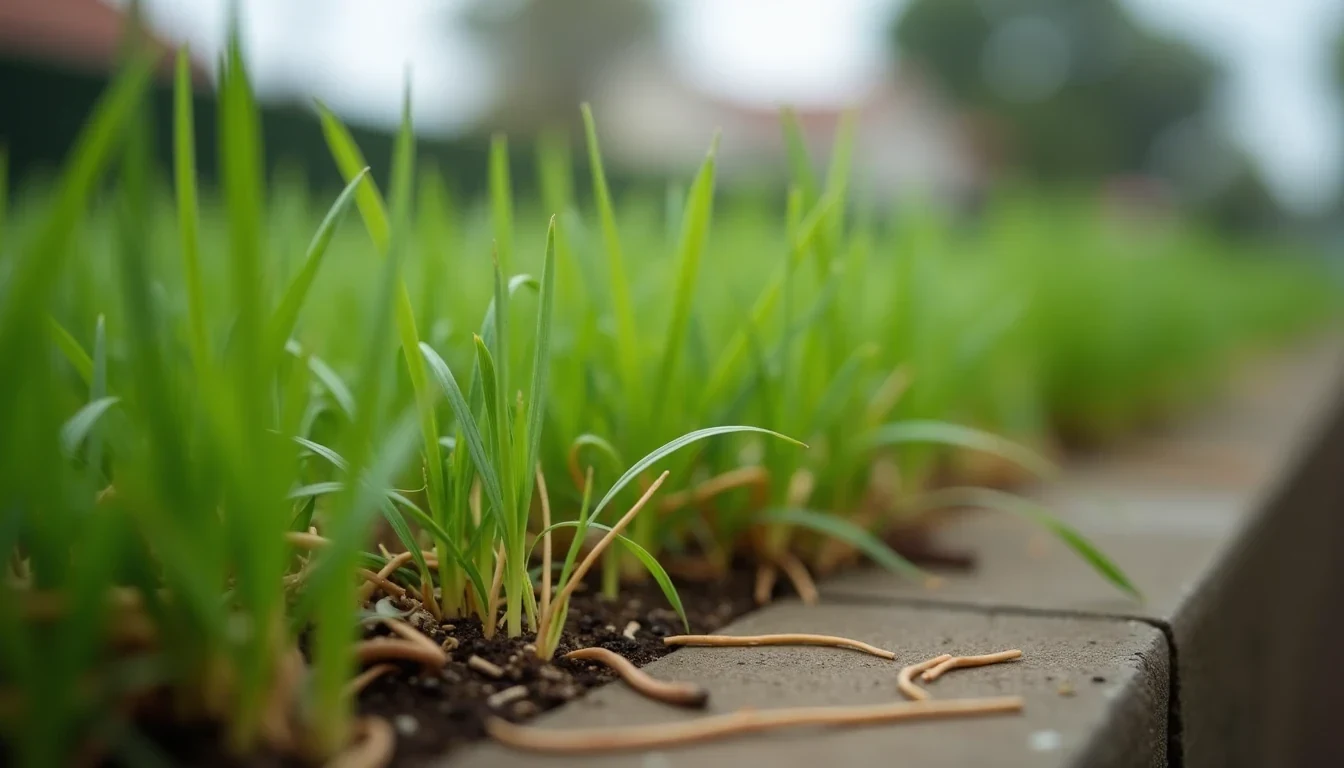
A Kikuyu lawn in Pretoria East and the same grass creeping into Rietvlei Nature Reserve are the same organism wearing two different legal costumes. Pennisetum clandestinum remains unlisted and entirely permissible as turf across most suburban properties. The moment a runner crosses into protected wetland or established veld, it triggers Category 1b obligations under NEMBA’s Alien and Invasive Species Regulations. The Department of Forestry, Fisheries and the Environment does not patrol garden fences, but the boundary exists in law regardless. Contractors who treat suburban maintenance as separate from ecological responsibility are asking for trouble they cannot mow their way out of.
The Legal Line Your Runners Cross Without Permission
NEMBA’s Category 1b classification for Kikuyu applies specifically to protected areas, natural habitats, and wetlands where the grass is not already established. In these zones, landowners must control or remove it, and introducing it fresh carries penalties. Residential cultivation faces no equivalent prohibition. This disconnect creates a practical absurdity: a contractor can legally install and maintain Kikuyu on a Waterkloof property while the identical genetic material, escaped via drainage channel or overhanging runner, becomes a compliance violation fifty metres downslope in a declared wetland.
The grass itself does not recognise this distinction. Stolons advance at measurable rates during summer growth periods, and rhizomes probe beneath soil at depths that shallow edging simply does not intercept. A lawn that ends at a property boundary on paper extends itself continuously through root and runner into whatever terrain offers moisture and light. Contractors working properties adjacent to sensitive zones operate under a dual accountability: delivering the neat turf their clients expect while ensuring zero propagule escape into territory where the same species transforms from amenity to offence.
Containment That Actually Holds
Deep edging forms the foundation of effective Kikuyu containment. “Deep” carries a specific meaning. Rigid plastic lawn edging, metal strips, or vertical concrete pavers set at 15–20 cm minimum depth create a subterranean wall that intercepts rhizome advance. Surface-level decoration, the 5 cm decorative strip sold at builders’ merchants, might tidy the visual line but achieves nothing against root penetration. For high-risk boundaries abutting natural habitat or valuable planting beds, corrugated iron or treated timber sunk to 30 cm provides more reliable interruption.
Runner removal demands calendar discipline, not occasional attention. During active growth from October through March on the Highveld, or year-round in KZN coastal and Lowveld conditions, surface stolons require inspection every two to four weeks. These visible threads establish adventitious roots at each node. Left in contact with soil for even brief periods, they self-propagate. Manual pulling, cutting back to the barrier line, and immediate removal from the site prevents the incremental colonisation that becomes unmanageable over a single season.
Mowing height influences runner production. Maintained at 25–50 mm, Kikuyu invests more energy in vertical leaf production and lateral density within the sward. Scalped or stressed turf redirects resources to desperate horizontal escape, generating the very runners a containment strategy seeks to minimise. Consistent height also improves visibility, making incipient escape attempts detectable before they establish.
Paving gaps require specific attention. Kikuyu exploits accumulated organic matter and soil particles in joints between pavers, progressively rooting and expanding to lift and displace hard surfaces. Regular sweeping with stiff brushes, combined with removal of any accumulated detritus, eliminates the substrate that permits initial colonisation. Once rhizomes penetrate beneath paving, mechanical removal becomes destructive to the hardscape itself.
Disposal as Active Prevention
Kikuyu’s vegetative vigour extends to its waste. Clippings, pulled runners, and excavated root fragments retain viability sufficient to establish new plants from minimal material. This characteristic transforms disposal from afterthought to active containment measure.
All Kikuyu plant material requires collection into sturdy, sealed refuse bags immediately upon removal. Open trailers or loose piles shed fragments onto roadways, drainage systems, and verge areas during transport. Municipal landfill or approved green waste facilities provide the appropriate destination. These sites operate at depths and compaction levels that suppress re-rooting, a condition home composting rarely achieves.
On-site composting of fresh Kikuyu material fails more often than it succeeds. Unless clippings undergo complete desiccation on an impervious surface for several weeks, residual viability persists through typical domestic composting temperatures and timeframes. The risk of distributing incompletely processed material back onto garden beds, with viable Kikuyu fragments included, outweighs any convenience saving.
Equipment cleaning between sites prevents mechanical transfer. Mower decks, trimmer heads, and edger blades accumulate vegetative fragments that drop onto subsequent properties. For contractors moving between Kikuyu-maintained suburban lawns and properties near sensitive zones, this basic hygiene becomes legally significant. A fragment transported from a legal lawn to an adjacent protected area constitutes introduction of Category 1b material, with associated liability.
What Escaped Kikuyu Destroys
The damage extends well beyond neighbourly irritation. In garden beds, Kikuyu’s dense stolon mat intercepts light at soil level, outcompeting ornamental plantings, shrubs, and vegetables for water and nutrients. Established specimens decline gradually, often without obvious above-ground symptom until root systems have been thoroughly dominated. Replacement planting into Kikuyu-contaminated soil fails repeatedly until the root network has been exhaustively removed.
Structural damage accumulates over years. Rhizomes penetrate expansion joints in concrete, progressively widening cracks as organic material swells and contracts with moisture cycles. Paving lifts, retaining walls destabilise, and in extreme cases foundation perimeters experience intrusion. Remediation costs typically exceed by orders of magnitude the preventive investment in proper edging and maintenance.
Neighbouring property invasion creates legal exposure beyond NEMBA. Common law nuisance principles apply to deliberate or negligent propagation of invasive plant material across boundaries. Contractors whose maintenance practices permit such spread face claims from affected property owners. Where that adjacent property borders protected land, the regulatory dimension compounds civil liability.
The Contractor’s Dual Brief
Routine suburban Kikuyu maintenance and ecological containment near sensitive zones differ in intensity and documentation. The suburban brief prioritises turf quality: uniform colour, appropriate density, consistent mowing and fertilisation schedule. Containment operates as a secondary consideration; basic edging and occasional runner removal suffice for most properties.
Near protected areas, wetlands, or natural habitat, containment becomes primary. Barrier installation requires deeper placement and more robust materials. Runner inspection frequency doubles. Buffer zones of non-Kikuyu groundcover or maintained hardscape between lawn edge and sensitive boundary provide additional interception opportunity. Client communication must document the legal status shift and the specific practices implemented to address it.
Pricing reflects this differentiation. Standard Kikuyu maintenance on the Highveld runs approximately R35–R55 per m² monthly for residential contracts, varying with site access and irrigation inclusion. Properties abutting sensitive zones command premium rates for the additional inspection, deeper edging maintenance, and specialised disposal protocols. Contractors who absorb these costs into standard pricing either underperform the containment requirement or subsidise ecological risk at their own expense.
This Weekend’s Containment Checklist
For homeowners and contractors with existing Kikuyu lawns, immediate assessment prevents seasonal escalation. Walk the lawn perimeter with a trowel, probing edging depth at multiple points. Anything shallower than 15 cm requires extension or replacement before summer growth accelerates. Inspect paving joints for accumulated soil and early root establishment; sweep and remove thoroughly. Check drainage lines and low points where runners might channel toward adjacent properties or natural areas. Bag any removed material immediately, seal, and schedule municipal waste disposal rather than adding to garden refuse piles.
For properties bordering sensitive zones, add fortnightly runner inspection to the maintenance calendar through the active growth period. Document each inspection with dated photographs. The record serves no immediate purpose until a compliance enquiry, a neighbour dispute, or an insurance assessment following boundary incursion makes it essential. Preparation that appears excessive until it becomes essential defines professional practice in this specific context.
Kikuyu remains the most widely planted warm-season turf in South African residential landscapes for sound reason: drought tolerance, recovery capacity, and traffic resilience exceed most alternatives. These same characteristics make it an aggressive invader where containment fails. The legal status distinction between lawn and weed, between permitted cultivation and Category 1b obligation, follows human boundaries the grass itself does not acknowledge. Contractor competence is measured not by the quality of turf maintained within the line, but by the certainty that nothing crosses it.